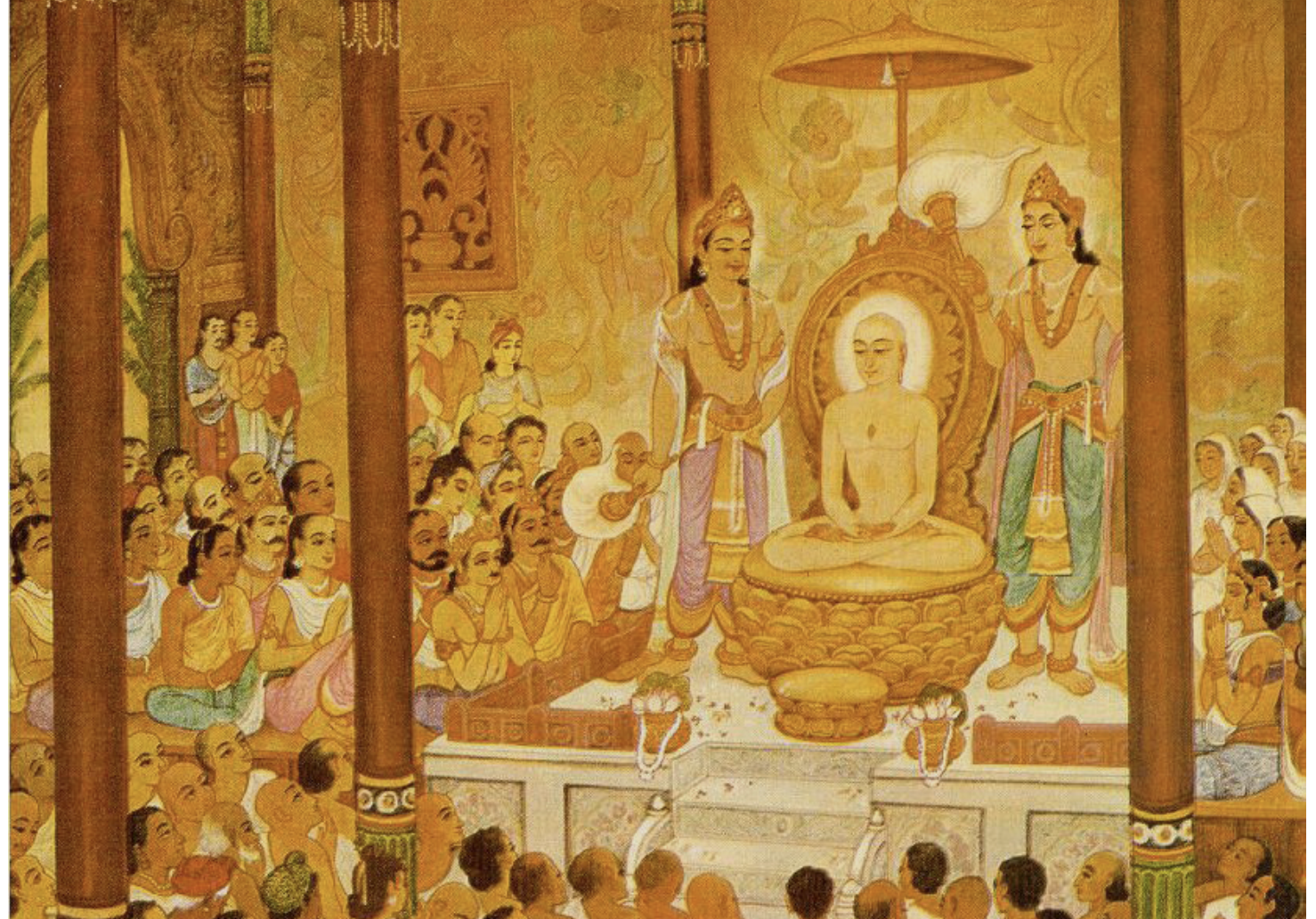
सोवाग-कुल-संभूओ, गुणुत्तरधरो मुणी । हरिएसबलो णाम, आसी भिक्खू जिइंदिओ ॥१२.१॥
Born of the lineage of a soapmaker (chandala), yet bearing the highest of virtues — there was a monk named Harikeshbal, a bhikshu with complete mastery over the senses.
The chapter opens with a striking paradox that is its entire argument in compressed form. Harikeshbal is born of a chandala family — the lowest rung of the ancient Indian caste hierarchy — yet he "bears the highest of virtues" (gunuttara-dharo). The scripture places caste and virtue in direct, unambiguous contrast from the very first line, announcing the chapter's central philosophical argument before the story even begins. The word order is completely deliberate: birth comes first, virtues come second — to establish that these are independent, causally unrelated facts about the same person. In the ancient Indian caste system, the chandala (sometimes translated as "soapmaker," sometimes as "cremation-ground worker" or "outcast") was considered so ritually impure that higher-caste individuals would not allow even their shadow to fall upon them. Contact with a chandala was considered spiritually contaminating in the Brahmin worldview. Harikeshbal was born into precisely this social category, at the very bottom of the caste pyramid. Yet the very next attribute applied to him is "guṇuttara-dharo" — bearing the highest of virtues — which places him at the very top of the spiritual hierarchy. This is not literary irony for dramatic effect; it is a precise philosophical statement. The Jain position is that birth and virtue have absolutely no causal connection. A soul is not made noble by the family it happens to be born into, by its ancestors, by its birth rituals, or by any social status assigned to it by others. A soul becomes noble exclusively through its own conduct, discipline, and spiritual practice. By placing this paradox in the chapter's opening line, the entire argument is pre-stated: watch everything that follows and see which one is truly real — the accident of birth, or the achievement of character.
The simple version: The monk Harikeshbal was born to the lowest caste — yet he carried the highest virtues. The chapter announces its argument in its opening line: birth and worth are two different things.