Uttaradhyayana Sutra · Chapter 14

The Arrowmaker (इषुकारीय)

Chapter 14 — Six souls reborn in Ishukar find their way back to renunciation together.

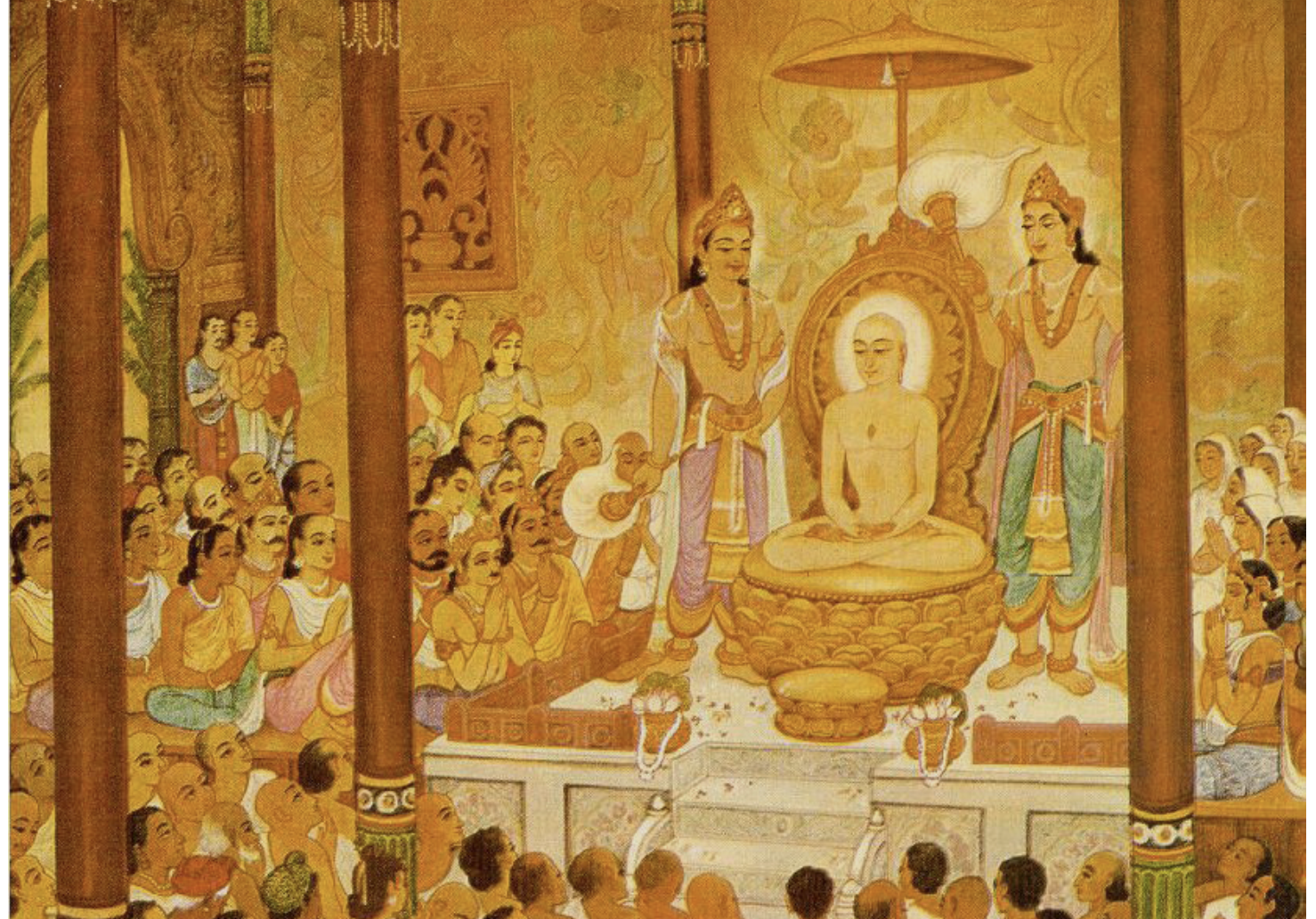
Chapter 14 Hero Image

मिरिहिसि रायं जया तया वा, मणोरमे कामगुणे पहाय ।
इक्को हु धम्मो णरदेव ताणं, ण विज्जइ अण्णमिहेह किंचि

“You will die, O king, at whatever time — having abandoned these mind-delighting sense pleasures. Dharma alone is the protection of a man, O lord of men — nothing else can be found here.”

About This Chapter

Ishukariya

Ishukariya is the fourteenth chapter of the Uttaradhyayana Sutra. It narrates the story of six souls who, after living together in a heavenly realm, are reborn in the city of Ishukar and eventually reunite in their quest for liberation.

The chapter is a series of philosophical dialogues—between sons and father, husband and wife, and queen and king—demonstrating how right understanding cuts through every worldly attachment. It ends with all six souls attaining final liberation.

53 Sutras
King Ishukar Addressed To
9 Sections
Adhyayana 14

The 53 Sutras

Each sutra is presented with the original Prakrit, English translation, and a simplified commentary.

Part I — Introduction of the Six Souls
14.1

देवा भवित्ताण पुरे भवम्मि, केई चुया एगविमाणवासी । पुरे पुराणे उसुयारणामे, खाए समिद्धे सुरलोगरम्मे ॥१॥

Having been gods in a former existence, some who fell — dwelling-together-in-one-divine-abode — were born in the ancient, renowned, prosperous city named Ishukar, as beautiful as the realm of the gods.

In their previous existence, six souls had lived together in one divine abode (a single vimāna in the heavenly realm). Upon exhausting their divine lifespan, they were born together in the ancient, renowned, and prosperous city of Ishukar — described as beautiful as the divine realm itself. The sutra opens mid-story, establishing that these six souls are not random strangers: their joint heavenly life created a karmic bond that pulls them together again in human form. The phrase egavimāṇavāsī — "dwelling in one divine abode" — is the seed of the entire chapter; shared merit, shared past, and now a shared opportunity for liberation.

The simple version: Six souls who had lived together as gods in the same heavenly home were born again together in a city called Ishukar — because their past connection pulled them back to each other.

Past LivesKarmic BondRebirth
14.2

सकम्मसेसेण पुराकएणं, कुलेसुदग्गेसु य ते पसूया । णिव्विण्णसंसारभया जहाय, जिणिंदमग्गं सरणं पवण्णा ॥२॥

By the fruit of their remaining previously-done karma, they were born in excellent families; becoming dispassionate and fearful of samsara, abandoning (sense pleasures), they took refuge in the path of the Jina Lord.

Their birth in Ishukar was not accidental — it was the direct result of the residue of their past good karmas (puṇya). They were born in the finest families in the city. But the more significant turn is the second half of the sutra: these souls did not simply enjoy their fortunate birth. They became ṇivviṇṇa — dispassionate, literally "turned away from" — fearing the cycle of samsara, and took shelter in the path of the Jina. The word saraṇa (refuge/shelter) is the same word used in the Navkar-rooted formula of taking three refuges. Their past good karma brought them a good birth; their dispassion moved them toward liberation.

The simple version: Because of good deeds done in past lives, these six souls were born into noble families — and instead of enjoying their good fortune, they turned away from the world's cycle of suffering and chose the path of the Jina.

PunyaDispassionRefuge
14.3

पुमत्तमागम्म कुमार दो वि, पुरोहिओ तस्स जसा य पत्ती । विसालकित्ती य तहेसुयारो, रायत्थ देवी कमलावई य ॥३॥

Having taken human male form — two (became) princes (sons of the priest), the priest of that (city) named Bhrigu and his wife Yasha, the greatly renowned (king) named Ishukar, the king there, and the queen Kamalavati.

This sutra maps all six souls to their present identities. Two became the two sons (princes) of the brahmin priest Bhrigu. Bhrigu himself is the third. His wife Yasha is the fourth. The fifth became King Ishukar — the king whose name gives the chapter its title — a man of great renown (visāla-kittī). The sixth became his chief queen, Kamalavati. All six completed their divine lifespan and descended together into Ishukar through the thread of their shared karmic bond. The chapter's entire drama — philosopher-sons, debating husband, reasoning wife, teaching queen, learning king — is established in this single sutra.

The simple version: The six souls took on six different roles in Ishukar: two became the priest's sons, one became the priest, one became his wife, one became the king, and one became the queen.

DestinyKarmic TiesRoles
Part II — The Sons' Dispassion and Request to Renounce
14.4

जाई जरा मच्चु भयाभिभूया, बहिं विहाराभिणिवट्टु चित्ता । संसारचक्कस्स विमोक्खहंडा, दट्टूण ते कामगुणे विरत्ता ॥४॥

Overwhelmed by the fear of birth, old age, and death, with their minds fixed outward toward liberation, desiring release from the wheel of samsara, having seen (the Jain monks), they (the two sons) became dispassionate toward sense pleasures.

Jain PrincipleTapa · Austerity

Deliberate practice that weakens karma and strengthens the soul.

CautionImpermanence and Death

All worldly things are temporary—clinging to them brings suffering.

The two sons had a direct encounter with Jain monks — and this encounter awakened their jātismraṇa-jñāna (memory of past lives). In those past lives, they had practiced tapas and restraint. The memory returned, and with it, dispassion. Three fears are named in sequence: birth (jagged with ignorance), old age (the gradual erosion of the body), and death (the final collapse). These three together constitute the existential weight of samsara. A mind that truly feels this weight turns outward — not outward into the world, but outward from the world, toward liberation.

The simple version: When the two sons saw Jain monks and remembered their own past lives of discipline, they were suddenly overwhelmed by the reality of birth, aging, and death — and turned completely away from worldly pleasures.

AwakeningJatismaranaSamsara
14.5

पियपुत्तगा दोण्हि वि माहणस्स, सकम्मसीलस्स पुरोहियस्स । सिरित्तु पोराणिय तत्थ जाई, तहा सुचिण्णं तव संजमं च ॥५॥

Both beloved sons of the brahmin, the duty-devoted priest — recalled the ancient births (from past lives) and likewise the tapas and restraint that had been purely practiced there.

Jain PrincipleTapa · Austerity

Deliberate practice that weakens karma and strengthens the soul.

Sutra 5 gives us the internal mechanism of the sons' awakening: they remembered their past lives (jātismraṇa) and, within that remembrance, they remembered the tapas and restraint they had purely practiced in those lives. The Gujarati commentary notes that the word sucin̥ṇam — purely practiced — is significant: the tapas in their past lives was not for worldly gain or name, but genuinely practiced. That purity created a residue that now surfaced as memory. Their father Bhrigu is described carefully here: he is sakamma-sīla — devoted to his own karmic duties (Vedic rites, priestly functions). His devotion is real. But it is precisely that devotion that will become the source of his coming argument with his sons.

The simple version: The two sons suddenly remembered their past lives — and in those memories, they saw themselves practicing deep tapas and restraint with sincerity. That memory became their compass.

Past PracticeMemoryTapas
14.6

ते कामभोगेसु असज्जमाणा, माणुस्सएसु जे याविं दिव्वा । मोक्खाभिकंखी अभिजायसड्ढा, तातं उवागम्म इमं उदाहु ॥६॥

Those two, unattached to sense pleasures — whether human or divine — desiring liberation and possessed of natural faith (in dharma), came to their father and spoke thus:

Jain PrincipleMoksha · Liberation

Freedom from karma and rebirth is the soul's eternal home.

The sutra captures the sons' internal state before they speak: they are unattached to pleasures in both realms — human and divine. This is notable because human pleasures are easier to renounce than divine ones. The fact that they are unattached to both signals a complete turning. Abhijāya-saḍḍhā — "naturally faithful" or "born-faithful" — describes the sons as possessing an inherent quality of faith that did not need external instruction; it arose from within due to their past-life cultivation. With this preparation, they approach their father. Whatever follows will be a dialogue between a son's inner awakening and a father's external tradition.

The simple version: The two sons, already unattached to any pleasure — human or heavenly — and already inclined toward liberation from within, walked up to their father and began to speak.

UnattachedNatural FaithResolve
14.7

असासयं दट्टु इमं विहारं, बहुऽंतरायं ण य दीहमाउं । तम्हा गिहंसि ण रई लभामो, आमंतयामो चरिस्सामु मोणं ॥७॥

"Seeing this existence to be impermanent, full of many obstacles, and with a short lifespan — therefore we find no delight in the household; we ask your permission and will practice the vow of restraint (mauna)."

The sons' opening words to their father are a philosophical statement, not an emotional one. They identify three facts about human existence: it is impermanent (asāsayam), it is full of obstacles (bahu-aṃtarāya), and its lifespan is short (na dīha-māum). These three facts, when truly seen, make the household — with its pleasures and comforts — appear insufficient as a purpose. Moṇaṃ here does not only mean silence; it refers to the entire monastic vow — the life of inner stillness, restraint, and renunciation. The sons are not fleeing; they are asking permission with respect. Āmaṃtayāmo — "we inform you, we ask your blessing." The request is humble even as the resolve is firm.

The simple version: The sons said to their father: "Life is short, uncertain, and full of difficulty — we find no real joy in household life, so please give us your permission to become monks."

ImpermanenceMaunaPermission
Part III — The Priest's Arguments Against Initiation
14.8

अह तायगो तत्थ मुणीण तेसिं, तवस्स वाघायकरं वयासी । इमं वयं वेयविवओ वयंति, जहा ण होइ असुयाण लोगो ॥८॥

Then their father, speaking words that obstructed the tapas of those aspiring monks, said: "The knowers of the Vedas say this teaching — that those without sons have no good destination."

Jain PrincipleTapa · Austerity

Deliberate practice that weakens karma and strengthens the soul.

The father's first argument is not personal — it is traditional. He invokes Vedic authority: "the Veda-knowers say." The Vedic tradition holds that a man has three debts (ṛṇa) — to the seers (repaid by study), to the ancestors (repaid by producing sons), and to the gods (repaid by sacrifice). Without sons, the ancestral debt is unpaid, and without that repayment, no good destination is possible after death. This is not Bhrigu being unreasonable — he is a sakamma-sīla priest, and his tradition teaches this. The sons will now dismantle this argument sutra by sutra, showing that the Vedic framework of protection does not hold under philosophical scrutiny.

The simple version: The father tried to stop his sons by quoting Vedic tradition: "Those who die without sons have no good afterlife — this is what our scripture teaches."

TraditionVedic ViewAncestral Debt
14.9

अहिज्ज वेए परिवेस्स विप्पे, पुत्ते परिट्टुप्प गिहंसि जाया । भोच्चाण भोए सह इत्थियाहिं, आरणगा होइ मुणी पसत्था ॥९॥

"O sons, study the Vedas, feed the brahmins, establish sons in the household; having enjoyed pleasures with women — (then) become a forest-dweller, then a praised monk."

Bhrigu now lays out the four-stage Vedic life-path (āśrama-dharma): student (brahmacārya), householder (gṛhastha), forest-dweller (vānaprastha), and finally monk (sannyāsa). His argument: you cannot skip stages. You must study, marry, produce sons, enjoy life — and only when all that is done, in old age, may you renounce. This is a coherent system. The sons' counter-argument (beginning at S12) will not dismiss this path as wrong but will show it is not sufficient — that Vedic study, feeding brahmins, and producing sons do not actually provide the protection that matters.

The simple version: The father gave his sons a roadmap: study the Vedas first, feed brahmins, have children, enjoy life with your wife — and only in old age should you renounce. Don't skip ahead.

Stages of LifeVedic RoadmapAshrama
14.10

सोयिग्गणा आयगुणिधणेणं, मोहाणिला पज्जलणाहिएणं । संततभावं परितप्पमाणं, लालप्पमाणं बहुहा बहुं च ॥१०॥

(The priest,) his inner grief blazing like fire fueled by the wood of his self-qualities, fanned by the wind of delusion — continuously tormented, lamenting in many ways and greatly:

CautionMoha · Delusion

False perception of reality keeps the soul bound in karma.

This sutra is a portrait of a father in genuine anguish. The imagery is precise: grief is the fire; his natural love for his sons is the fuel-wood; and the wind of delusion (moha) makes the fire blaze uncontrollably. The Jain understanding is compassionate here — Bhrigu's grief is not wrong, but it is driven by moha (attachment-delusion). His self-qualities, which in another context might produce tapas, here produce sorrow because they are bound to attachment. The sutra does not mock the father. It describes him truthfully. The next sutra will show him trying again — pleading, coaxing, offering alternatives.

The simple version: The father was burning inside — his love for his sons, twisted by attachment, made his grief fierce and continuous. He kept pleading with them in many ways.

GriefMohaAttachment
14.11

पुरोहियं तं कमसोऽणुणंतं, णिमंतयंतं च सुए धणेणं । जहक्कमं कामगुणेहिं चेव, कुमारगा ते पसिमक्ख वक्कं ॥११॥

To that priest who was gradually pleading, repeatedly luring them with (promises of) sons and wealth, with sense pleasures step by step — the princes spoke this deliberate word:

The father has tried every approach: tradition, love, grief, promises of sons, promises of wealth, promises of pleasure — layer by layer, kamaso (gradually), each inducement more pressing than the last. The sons are not provoked; they are thoughtful. Pasimakkha — "deliberately" — signals that what follows is not impulsive. They have considered everything their father has offered and will now respond with systematic philosophical arguments, not with emotion. The teacher of this chapter is not the father or the sons alone — it is the collision between Vedic convention and the Jain philosophical framework that follows.

The simple version: The father tried everything — love, promises of wealth, pleasure, family — one by one, gradually, to change his sons' minds. They listened to everything, thought carefully, and then replied.

TemptationDeliberationPersuasion
Part IV — The Sons' Philosophical Refutation
14.12

वेया अहीया ण हवंति ताणं, भुत्ता दिया णिंति तमं तमेणं । जाया य पुत्ता ण हवंति ताणं, को णाम ते अणुमण्णेज्ज एयं ॥१२॥

"The Vedas, merely by being studied, do not become one's protection; the days enjoyed (by brahmins fed) lead only deeper into darkness; sons born are no protection — what wise person, then, would accept your statement?"

The sons launch their philosophical counterattack. They take each of the father's three arguments and invert them. (1) Vedic study: Learning the Vedas does not produce refuge — the real protection comes from dharmic conduct, not scholarly knowledge. The Vedic tradition itself says: "śilpamadhyayanaṃ nāma, vṛttaṃ brāhmaṇa-lakṣaṇam" — "study is the skill, but conduct is the mark of a brahmin." (2) Feeding brahmins: The commentary notes sharply that brahmins who accept food while engaging in himsa (animal sacrifice) are not elevating others — they are leading them deeper into tama (darkness). (3) Sons: A son cannot prevent anyone's fall into adharma or bad destinies. The question "what wise person would accept this?" is not disrespectful — it is a genuine philosophical challenge.

The simple version: The sons replied: "Study of scriptures doesn't protect you. Feeding priests doesn't protect you. Having sons doesn't protect you. Who with real understanding would accept your arguments?"

ProtectionCritiqueDharma
14.13

खणिमित्तसुक्खा बहुकालदुक्खा, पगामदुक्खा अणिगामसुक्खा । संसारमोक्खस्स विपक्खभूया, खाणी अणत्थाण उ कामभोगा ॥१३॥

"Sense pleasures give momentary happiness and long-duration suffering; they are replete with pain and scarce in joy; opposed to liberation from samsara — sense pleasures are truly a mine of evils."

Jain PrincipleMoksha · Liberation

Freedom from karma and rebirth is the soul's eternal home.

CautionDukha · Suffering

Suffering arises from identifying with the perishable body and desires.

Having dismantled the father's positive arguments (protection through Vedas, feeding, and sons), the sons now turn to the nature of sense pleasures themselves. The analysis is fourfold and precise: momentary in happiness, long in suffering, scarce in joy, abundant in pain. The metaphor khāṇī — a mine — is exact: just as a mine appears to offer treasure but requires endless labor, risk, and eventually exhausts itself, sense pleasures appear to offer happiness but deliver suffering. The phrase saṃsāra-mokkha-vipakkha — "opponent of liberation" — is the deepest charge: sense pleasures are not just insufficient, they are actively opposed to liberation.

The simple version: Sense pleasures give you a moment of happiness but a long stretch of suffering. They give little joy and much pain. They are not just useless — they actively work against your liberation.

Pleasure vs PainSamsaraMine of Evils
14.14

परिव्वयंते अणियत्तकामे, अहो य राओ परितप्पमाणे । अण्णप्पमत्ते धणमेसमाणे, पप्पोति मच्चुं पुरिसे जरं च ॥१४॥

"A person wandering with desires not turned back, tormented day and night, heedless of the self and intent on acquiring wealth — that person reaches death and old age."

CautionImpermanence and Death

All worldly things are temporary—clinging to them brings suffering.

This sutra draws the portrait of a life spent in desire. The man is not evil — he is simply caught. He wanders (parivvayaṃte) — the word implies aimless roaming, circling without arrival. He is tormented day and night — because desire, when unfed, burns, and when fed, still burns. He is aṇṇappamaṭṭa — "heedless of the self" — meaning his attention is entirely on external objects, not on the soul within. He pursues wealth as the means. And at the end of all this striving, wandering, and burning — he simply reaches old age and death. The commentary notes: he goes empty-handed. All that effort, and still the destination is the same: death.

The simple version: A person who never lets go of desires wanders through life burning day and night, always chasing wealth — and at the end, just reaches old age and death with nothing to show for it.

DesireWealthAging & Death
14.15

इमं च मे अत्थि इमं च णत्थि, इमं च मे किच्च इमं अकिच्चं । तं एवमेवं लालप्पमाणं, हरा हरंति ति कहं पमाओ ॥१५॥

"'This is mine and this is not mine; this I must do and this I need not do' — the one lamenting thus, the Haras (days and nights, as thieves of life) carry him away — how then can there be negligence (in dharma)?"

CautionPamada · Negligence

Indifference to spiritual practice wastes the precious human birth.

The sutra captures the internal noise of an unawakened life: mine / not mine / to do / not to do. This mental chatter is endless. And while the person is absorbed in it — cataloguing possessions and tasks — the Harās are already at work. Harā literally means thieves or robbers; here they are day and night, the relentless passage of time that drains life without notice. The sons' point is devastating in its simplicity: while you are busy deciding what is yours and what is not, life is already being taken from you. The sutra ends with a rhetorical question: given all this, how can anyone afford to be negligent (pamāo) about dharma?

The simple version: While a person is busy thinking "this is mine, that is not mine, I must do this, I don't need to do that" — day and night are quietly stealing their life. How can anyone afford to be lazy about dharma in that situation?

TimeNegligenceMind Chatter
Part V — On Wealth, the Soul, and Past Karma
14.16

धणं पभूयं सह इत्थियाहिं, सयणा तहा कामगुणा पगामा । तवं कए तप्पइ जस्स लोगो, तं सव्व साहीणमिहेव तुभ्भं ॥१६॥

"Abundant wealth together with women, kinsmen, and plentiful sense pleasures — the world torments itself in tapas for whose attainment — all of that is already under your (our) control right here."

Jain PrincipleTapa · Austerity

Deliberate practice that weakens karma and strengthens the soul.

The father has shifted tactics — from tradition to temptation. He points to everything the world strives for: wealth, women, kinsmen, pleasures. People torment themselves in tapas hoping to attain these things in a future life. You already have them. The argument has a seductive logic: why renounce what others pray for? The sons' response (S17) will show they are not renouncing out of ignorance or deprivation — they renounce precisely because they understand the nature of what they are letting go.

The simple version: The father argued: "People in the world torture themselves through fasting and austerities just hoping to get wealth, pleasure, and family in a future life — and you already have all of it. Why give it up?"

FortuneTemptationComparison
14.17

धणेण किं धम्मधुराहिगारे, सयणेण वा कामगुणेहिं चेव । समणा भविस्सामु गुणोहधारी, बहिंविहारा अभिगम्म भिक्खं ॥१७॥

"What is the use of wealth for one charged with the burden of dharma? Or of kinsmen? Or of sense pleasures? We will become shramanas, bearers of virtues, wandering outside, subsisting on alms."

Jain PrincipleMoksha · Liberation

Freedom from karma and rebirth is the soul's eternal home.

The sons' answer is not defensive — it reframes the question entirely. When one is carrying the burden of dharma — meaning when one is seriously committed to the path of liberation — wealth, kinsmen, and sense pleasures are not benefits. They are weights. The metaphor dhura (a yoke or burden) applied to dharma is significant: dharma is not a light hobby. It is a full-weight responsibility. Guṇoha-dhārī — bearers of the stream of virtues — describes what they intend to become: carriers of right perception, right knowledge, and right conduct. The Vedic tradition's Upaniṣadic voice itself says: "na prajayā na dhanena, tyāgenaikena amṛtatvam āṃśuḥ" — "not through sons, not through wealth — only through renunciation does one reach immortality."

The simple version: The sons replied: "When your purpose is dharma and liberation, wealth, family, and pleasure are not assets — they're extra weight. We will become monks, carry virtues, wander freely, and live on alms."

ShramanaDharma BurdenVirtues
14.18

जहा य अग्गी अरणी असंतो, खीरे घयं तेल्ल महातिलेसु । एमेव जाया सरीरंसि सत्ता, सम्मुच्छइ णासइ णाविचिट्ठे ॥१८॥

"Just as fire (exists latently) in the arani wood though not visible, as ghee in milk, as oil in sesame seeds — so the soul arises in the body, perishes (with it), and does not remain afterward."

⚠️ Note: This is the father Bhrigu's argument — a materialist-Vedic position denying the soul's independent persistence. The sons refute this in Sutra 19. This sutra does NOT represent the Jain view. Bhrigu now makes his most philosophical argument: the soul is like fire in wood or ghee in milk — a product of material conditions. When the body dies, the soul-fire is extinguished. There is no persistent soul that carries karma forward. This is a form of the Vedic-materialist position (influenced by the Lokāyata school). The father's motivation is clear: if the soul does not persist across births, there is no karmic continuity, and therefore no philosophical basis for seeking liberation through renunciation. The sons will demolish this in S19 by turning the same logic around: precisely because the soul is immaterial, it is not subject to material causation — and therefore it is eternal.

The simple version: The father argued: "The soul is just like fire hidden in wood or butter hidden in milk — it arises from matter and disappears when the body dies. There's nothing to save or liberate."

MaterialismAnalogyDebate
14.19

णो इंदियगेज्झ अमुत्तभावा, अमुत्तभावा वि य होइ णिच्चो । अज्झत्थहेउं णियतयस्स बंधो, संसारहेउं च वयंति बंधं ॥१९॥

"Because it is immaterial, the soul is not grasped by the senses — and precisely because it is immaterial, it is also eternal. The karmic binding arises from the soul's own inner causes, and the knowers call this binding the cause of samsara."

The sons' philosophical counter-argument is elegant: the father used the analogy of fire in wood to argue that the soul is a material product and perishes with the body. The sons turn this: if the soul were material, it could be perceived by the senses. But it cannot be perceived by the senses. Therefore it is immaterial (amuttabhāva). And precisely because it is immaterial, it is also eternal — not subject to the arising and perishing that material things undergo. The second half of the sutra introduces the Jain mechanism of karma: the soul's bondage to karma arises from its own internal dispositions (adhyavasāya — inner impulses of passion, attachment, aversion). This bondage — not physical death — is the real cause of samsara. Liberation therefore requires purifying those inner dispositions, not simply biological processes.

The simple version: The sons replied: "The soul can't be touched or seen by the senses — that's exactly why it's not material, and not material means eternal. What keeps it trapped in samsara isn't the body dying — it's the internal passions that create karma."

Immaterial SoulEternityKarma Cause
14.20

जहा वयं धम्मजाणमाणा, पावं पुरा कम्मकासि मोहा । ओरुभमाणा परिरक्खयंता, तं णेव भुज्जो वि समायरामो ॥२०॥

"Just as we, knowing dharma (now), previously committed evil karma out of delusion — slaughtering and protecting (animals) — we shall not perform that again."

CautionMoha · Delusion

False perception of reality keeps the soul bound in karma.

The sons end their philosophical response with a personal vow: whatever we did in the past when we did not know — we will not do again. The specific acts named — orubhamāṇā (slaughtering animals, as in Vedic animal sacrifice) and parirakkha-yaṃtā (protecting animals for sacrifice) — are exactly the duties their father, as a purohita (chief priest), performs. The sons are not attacking their father. They are marking a line: we know better now. The past is karma already made; we cannot undo it. But we will not make it again. This vow of non-repetition — grounded in knowing dharma — is the foundation of the renunciation they are about to formally request.

The simple version: The sons said: "When we didn't know better, we did things that caused harm — including participating in animal sacrifice. Now that we know, we won't do those things again."

AhimsaVowTransformation
Part VI — The Night Dialogue and Final Decision
14.21

अब्भाहयंमि लोगंमि, सव्वओ परिवारिए । अमोहाहिं पडंतीहिं, गिहंसि ण रई लभे ॥२१॥

"In a world struck down (by death), surrounded on all sides, with inescapable (forces) falling — I find no delight in the household."

CautionImpermanence and Death

All worldly things are temporary—clinging to them brings suffering.

The dialogue shifts register. What follows (S21–25) is one of the most poetically structured exchanges in the chapter — a father asking what his sons mean, the sons explaining through a precise triple metaphor. The sons begin with the conclusion: I find no delight in the household. The reason is compressed into three images: the world is struck down (abbhāhata), surrounded (parivārita), and under inescapable falling forces (amohāhiṃ paḍaṃtīhiṃ). These three phrases are deliberately cryptic — the father will ask what they mean in S22, and the sons will explain in S23. The structure mirrors a teaching method: state the conclusion, invite the question, then illuminate.

The simple version: The sons said: "This world is being struck down, surrounded, and there are forces falling on it that cannot be stopped — I find no joy in just living in a house in the middle of all this."

DisenchantmentClarityExistential
14.22

केण अब्भाहओ लोगो, केण वा परिवारिओ । का वा अमोहा वुत्ता, जाया चिंतावरो हु मे ॥२२॥

"By what is the world struck down? By what is it surrounded? What are the 'inescapable forces' spoken of? O sons, I am truly filled with deep thought."

The father's response is not dismissal — it is genuine inquiry. Ciṃtāvaro hu me — "I am truly filled with thought." He is not arguing now. He is asking. This is the turning point in Bhrigu's arc: the sons' words have reached him, even if he does not yet accept them. A teacher in the Jain tradition values this quality of jijñāsā — genuine questioning. The father's willingness to ask rather than argue opens the door for the most concentrated philosophical exchange of the chapter: what is actually happening to this world?

The simple version: The father asked, genuinely wanting to understand: "What is 'striking down' the world? What is 'surrounding' it? What are these inescapable forces you're talking about? Your words are making me think deeply."

InquiryContemplationTurning Point
14.23

मच्चुणाऽब्भाहओ लोगो, जराए परिवारिओ । अमोहा रयणी वुत्ता, एवं ताय वियाणह ॥२३॥

"The world is struck down by death; it is surrounded by old age. The nights (days and nights of passing time) are called 'inescapable' — know it thus, O father."

CautionImpermanence and Death

All worldly things are temporary—clinging to them brings suffering.

Three riddles, three answers. The world is struck down — by death. The world is surrounded — by old age. The inescapable falling forces — are the nights and days, each one diminishing the lifespan without exception. Amohā means "unerring" — not a single night passes that can be recalled, not a single day can be frozen. The Gujarati commentary on the word amohā is profound: "that which cannot be blocked — just as no sword can stop the passage of time." The sons' teaching here is not pessimism. It is clarity. When you see these three forces operating without pause — death, aging, time — the question of what to do with your life becomes urgent and clear.

The simple version: The sons explained: "Death is what keeps striking the world down. Old age is what keeps surrounding it. And every passing night and day is the inescapable force that keeps reducing your lifespan — without exception."

DeathAgingTime
14.24

जा जा वच्चइ रयणी, ण सा पडिणियत्तइ । अहम्मं कुणमाणस्स, अफला जंति राइओ ॥२४॥

Each night that passes does not return. For the one practicing adharma, those nights pass fruitlessly.

The teaching becomes precise: every unit of time that passes is permanent. Gone is gone. This is stated twice — once for adharma (S24) and once for dharma (S25) — to make the symmetry unmistakable. If you spend this irreversible time in adharma, it is wasted absolutely. Aphalā — fruitless — does not just mean "you didn't gain anything." It means the time is actively lost without return, with negative karmic consequence. The double repetition of jā jā (each and every) is Prakrit's way of emphasizing universality: not some nights, not most nights — every single one.

The simple version: Every night that passes is gone forever — it will never come back. If you spend it in adharma, those nights are totally wasted.

IrreversibleWasted TimeAdharma
14.25

जा जा वच्चइ रयणी, ण सा पडिणियत्तइ । धम्मं च कुणमाणस्स, सफला जंति राइओ ॥२५॥

Each night that passes does not return. For the one practicing dharma, those nights pass fruitfully.

The exact mirror of S24 — same structure, same universal law of irreversible time, but opposite result. For the one practicing dharma, each passing night is saphalā — fruitful. This does not mean productive in a worldly sense. It means the time adds to the soul's liberation rather than to its bondage. The teaching embedded in the pairing of S24 and S25 is that time itself is neutral — it is what you do within it that determines whether each irreversible unit moves you toward liberation or away from it. The question is not whether time passes (it always does), but what direction it takes you.

The simple version: The same irreversible nights — if you spend them in dharma, they become fruitful. The law of time doesn't change. Only the use of it does.

Fruitful TimeDharmaDirection
14.26

एगओ संविसत्ताणं, दुहओ सम्मतसंजुया । पच्छा जाया गमिस्सामो, भिक्खमाणा कुले कुले ॥२६॥

"Having lived together in (worldly) involvement on one side, and joined together in right-thought on both sides — afterwards, O sons, we shall go (as monks) begging from family to family."

CautionSamsara · Worldly Existence

Involvement in worldly activities generates binding karma.

⚠️ Note: This is the father speaking — offering a compromise: let us first live together as householders observing the layperson's vows (sammata-saṃjuyā), and in old age we will all renounce together. The address jāyā (O sons) confirms it is Bhrigu speaking. Bhrigu has been transformed by his sons' arguments. He no longer argues against renunciation — he now proposes it, but with a delay. "Let us first live together, you and I, observing the vows of laypeople. Then in old age, we will all renounce together." This is not obstruction. This is a genuine compromise from a father who loves his sons and has been moved. The sons, however, cannot accept delay — S27 and S28 will explain why: there is no guarantee of tomorrow. The father's proposal assumes time remains available. The sons' view is that this assumption is itself the fundamental error.

The simple version: The father, now persuaded by his sons' arguments, made a different proposal: "Let's all live together first, following the layperson's vows, and then when we're old, we'll all renounce together and become monks."

CompromiseDelayVows
14.27

जस्सत्थि मच्चुणा सक्खं, जस्स वऽत्थि पलायणं । जो जाणे ण मरिस्सामि, सो हु कंखे सुए सिया ॥२७॥

"He who has a compact with death (an agreement of immunity), he who has the power to flee from it, he who knows 'I will not die' — only such a one might desire (to wait and do it) in the path of sons."

CautionImpermanence and Death

All worldly things are temporary—clinging to them brings suffering.

The sons' rebuttal of the father's compromise is devastating in its clarity. The logic is watertight: only someone who (a) has made a deal with death, or (b) can flee from death, or (c) genuinely knows "I will not die" — only such an impossible person could rationally defer dharma to a later stage. The father's proposal (paccā gamissāmo — we'll go later) rests on the assumption of future time. But no such assumption can be made. The three conditions the sons enumerate are ironically impossible — precisely to show that deferral is never rational. Every person alive knows, at some level, that death can come at any time. The sons simply make this explicit.

The simple version: The sons replied: "You can only afford to wait until old age if you have made a deal with death, can run away from it, or know for certain you won't die. Can you honestly say any of those are true?"

UrgencyDeath DealLogic
14.28

अज्जेव धम्मं पडिवज्जयामो, जिहिं पवण्णा ण पुणब्भवामो । अणागयं णेव य अत्थि किंचि, सद्धाखमं णे विणइतु रागं ॥२८॥

"Even today we shall embrace the dharma — by entering which one does not return to rebirth. There is nothing future that is certain; therefore let faith remove our attachment."

CautionSanga · Attachment

Emotional bonds to people and things perpetuate suffering.

This is the sons' final word on the timing question: ajjeva — today, not tomorrow, not in old age. The dharma they seek is specifically defined as that which, once entered, ends rebirth. Saddhākhamaṃ — "let faith be the means to remove attachment" — is a profound instruction about the role of śraddhā (faith) in the Jain path. Faith here is not blind belief; it is a tested conviction that has developed through past-life practice. It is this faith that has the power to cut through the attachment (rāga) that makes the father's proposal of delay seem reasonable. The sons close the debate on timing. What follows is Yasha's journey.

The simple version: The sons said: "We are embracing the path today — not later. The future is never guaranteed. Let our faith cut through our attachment to waiting."

FaithTodayAttachment
Part VII — The Priest's Wife Yasha Speaks and Joins
14.29

पहीणपुत्तस्स हु णत्थि वासो, वासिट्टि भिक्खायरियाइ काओ । साहाइ रुक्खो लहइ समाहिं, छिण्णाहि साहाहि तमेव खाणुं ॥२९॥

"For one bereft of sons, O Vasishtha-daughter (Yasha), there is truly no fitting dwelling in the household — the purpose is now the life of a wandering mendicant. A tree attains peace through its branches — when they are cut, that very (tree) becomes the stump."

The priest Bhrigu now speaks to his wife Yasha. He addresses her as vāsiṭṭi — daughter of the Vasishtha lineage — which in ancient tradition was the highest form of respectful address to a woman of priestly family. His message: now that the sons have gone, remaining in the household has no meaning. He supports this with the tree metaphor: a tree's beauty and purpose is in its branches (children). When the branches are gone, what remains is the stump. But — crucially — the stump is not ruined; it simply takes its essential form. This is not despair. It is a reframing: without children, the householder becomes the bare essential self, which is exactly what is needed for renunciation.

The simple version: The priest said to his wife Yasha: "Without our sons, staying in the household makes no sense anymore. A tree's glory is in its branches — but even when the branches are gone, the stump stands. Our time as a wandering monk and nun has come."

Tree MetaphorPurposeEssential Self
14.30

पंखाविहूणो व जहेह पक्खी, भिच्च विहूणो व रणे णरिंदो । विवण्णसारो विणओ व पोए, पहीणपुत्तो मि तहा अहंपि ॥३०॥

"Like a bird here without wings, like a king in battle without soldiers, like a merchant's boat without cargo — bereft of sons, I (Bhrigu) am the same."

Three metaphors build a portrait of purposelessness: a bird without wings cannot fly; a king without soldiers cannot rule; a merchant without cargo cannot trade. In each case, the essential function of the entity is removed. Bhrigu applies this to himself: without sons, the householder has lost his essential function in the Vedic framework. But there is a deeper reading: by voicing his own purposelessness, Bhrigu is releasing attachment to the householder identity. The very arguments he used to hold his sons back — you need sons for ancestral rites, you need family for meaning — he now turns on himself as reasons to renounce. His sons' teachings have completed their work.

The simple version: The priest said: "Without my sons, I am like a bird without wings, a king without an army, a merchant with an empty boat — I am without function, without purpose in this household."

PurposelessFunctional LossRelease
14.31

सुसंभिया कामगुणा इमे ते, संपिंडिया अग्गरसप्पभूया । भुंजामु ता कामगुणे पगामं, पच्छा गमिस्सामु पहाणमग्गं ॥३१॥

"These sense pleasures are well-gathered, assembled, consisting of the finest tastes — let us enjoy them abundantly; afterwards we shall pursue the noble path."

⚠️ Note: This is Yasha speaking — she is not yet convinced and is making a final argument for delay before she ultimately joins. The PDF commentary confirms "purohit patnī" (priest's wife) is the speaker. Yasha's first response is a recognizable human impulse: "Let us enjoy what we have — then renounce." She is not arguing against renunciation. She accepts it as the destination. But she wants the enjoyment first. The imagery she uses — "well-gathered, finest tastes" — shows she is genuinely savoring what exists. The Gujarati commentary notes that this is the voice of a woman whose mind is still imprinted with the bhogavāsanā (desire-impressions of pleasure). Her husband will gently but firmly respond in S32 — not dismissing her, but guiding her through the same reasoning the sons gave him.

The simple version: Yasha said: "Everything we have is beautifully arranged and ready. Let's fully enjoy our pleasures first — and then we'll take the path of renunciation."

Enjoyment FirstDesireDelay
14.32

भुत्ता रसा भोइ जहाइ पे वओ, ण जीवियट्ठा पजहामि भोए । लाभं अलाभं च सुहं च दुक्खं, संचिक्खमाणो चिरस्सामि मोणं ॥३२॥

"O fortunate one, having enjoyed flavors, age itself abandons the one who enjoyed them. I do not abandon pleasures for the sake of mere (continued) life. Having considered gain and loss, pleasure and pain — I will accept the vow (of monastic life)."

⚠️ Note: The priest Bhrigu is now addressing Yasha as bhoi (O fortunate/blessed one) — confirming he is the speaker. Bhrigu's response to Yasha is measured and wise. He tells her: I am not abandoning pleasures because I fear life or want something else in return. I am abandoning them because I have weighed everything — gain and loss, pleasure and pain — and the weighing is complete. The phrase lābhaṃ alābhaṃ ca suhaṃ ca dukkhaṃ is the Jain phrase for "equanimity in all circumstances." By listing it here, Bhrigu is saying: I have arrived at equanimity. I have considered every side. The vow I am about to take is not escapism — it is informed, deliberate, and complete.

The simple version: The priest said to Yasha: "Pleasures are enjoyed and then youth leaves — that's the natural order. I'm not renouncing to gain something. I've thought about every kind of gain, loss, joy, and pain — and I'm ready to take the vow."

EquanimityYouth FadesVow
14.33

मा हु तुमं सोयरियाण संभरे, जुण्णो व हंसो पडिसोत्तगामी । भुंजाहि भोगाइं मए समाणं, दुक्खं खु भिक्खायरियाविहारो ॥३३॥

"Do not grieve remembering your companions, like an aged swan trying to swim upstream — enjoy pleasures together with me; truly, the wandering life of a mendicant is painful."

Jain PrincipleTyaga · Renunciation

Voluntarily releasing worldly attachments leads to spiritual freedom.

⚠️ Note: This is Yasha's husband (Bhrigu) now arguing against full renunciation for her — urging her to stay. This appears contradictory but reflects his genuine concern: he has resolved to renounce, but is not sure Yasha can bear the hardship of mendicant life. This sutra shows the complexity of Bhrigu's love for Yasha. He has resolved to go. But he is uncertain whether she should follow. The swan metaphor is compassionate: an aged, weak swan swimming against a strong current suffers needlessly. Bhrigu fears Yasha will suffer in the austerities of mendicant life. His advice — stay and enjoy — is not hypocrisy. It is love miscalculated. Yasha's response (S34-36) will show that she has already gone beyond the need for this protective caution. She is not a weak swan. She is the rohita fish of S35 — cutting through the net to freedom.

The simple version: The priest told Yasha: "Don't torture yourself missing your family — like an old swan fighting the current. Stay with me and enjoy our remaining pleasures together. The monk's life is genuinely hard."

HardshipConcernSwan Analogy
14.34

जहा य भोई तणुयं भुयंगो, णिम्मोयिणं हिच्च पलेइ मुत्तो । एमेए जाया पयहंति भोए, ते हं कहं णाणुगमिस्समेक्को ॥३४॥

"O blessed one, just as a serpent sheds its thin old skin and goes, free and without looking back — in this same way these sons are abandoning pleasures; how shall I alone not follow them?"

Yasha's answer to her husband is one of the most beautiful moments in the chapter. She turns his own concern back at him with a natural image: the serpent. A serpent sheds its skin completely — no hesitation, no grief, no looking back at what was discarded. It simply goes. Her sons are doing exactly this. And she has seen it. How, she asks, can she remain alone? The question is rhetorical — its answer is already embedded in the asking. By framing it this way, Yasha shows she is not following out of weakness or loneliness. She is following because she has seen what true renunciation looks like and recognizes it as her own path.

The simple version: Yasha replied: "Look at how a snake sheds its old skin and just goes — free, without even glancing back. That's what our sons are doing. How could I stay behind alone?"

Snake SkinFreedomDecision
14.35

छिदितु जालं अबलं व रोहिया, मच्छा जहा कामगुणे पहाय । धोरेयसीला तवसा उदारा, धीरा हु भिक्खायरियं चरंति ॥३५॥

"Like weak rohita fish cutting through the net — the fish having abandoned sense pleasures — the yoke-bearing, noble in tapas, the steadfast ones truly practice the wandering mendicant life."

Jain PrincipleTapa · Austerity

Deliberate practice that weakens karma and strengthens the soul.

Yasha's second metaphor — the rohita fish — completes her self-declaration. Even a weak fish can cut through a worn net if it moves with purpose. The net of sense pleasures may seem strong — and the individual renouncer may seem small — but the act of cutting is possible and real. The second half of the sutra shifts to the aspirational image: dhoreyasīlā — like a yoke-bearing bull, bred for endurance and purpose. The steadfast ones, noble in tapas, simply walk the mendicant path. Yasha is not just agreeing to follow. She is announcing who she intends to become.

The simple version: Yasha continued: "Even a weak fish can break through a net. The resolute and noble ones, strong in their practice, cut through the net of pleasures and walk the path of the monk. That is what I intend to do."

Net CutterEnduranceResolve
14.36

जहेव कुंचा समइक्कमंता, तयाणि जालाणि दलितु हंसा । पलेंति पुत्ता य पई य मझं, ते हं कहं णाणुगमिस्समेक्का ॥३६॥

"Just as cranes cross over and geese, having shattered the spread nets, fly away freely — my sons and my husband from my midst — how shall I, alone, not follow them?"

Yasha's third and final metaphor — now combining two species: cranes that simply fly over what would trap them, and geese (haṃsas) that break through nets and soar. She applies both images to herself. Her sons are the cranes — they crossed over. Her husband is the goose — he shattered his net and is free. And she is in the middle of it all (majjhaṃ), watching both go. The question is the same as in S34 — "how shall I alone not follow?" — but here it is final. It is not a question. It is a declaration. Yasha has completed her inner journey from reluctance (S31) to resistance (S33, countered by S34) to resolution (S35, S36).

The simple version: Yasha said: "Cranes fly right over — geese shatter the nets and soar free. My sons and my husband are already gone from my side. How could I possibly stay behind alone?"

SoaringBreak FreeDeclaration
Part VIII — Queen Kamalavati Teaches King Ishukar
14.37

पुरोहियं तं ससुयं सदारं, सोच्चाऽभिणिक्खम्म पहाय भोए । कुडुंबसारं विउलुत्तमं च, रायं अभिक्खं समुवाय देवी ॥३७॥

Having heard that the priest with his sons and wife had renounced, abandoned pleasures, and departed, leaving behind even the greatest household wealth — the queen repeatedly approached the king.

The scene shifts to the palace. The queen Kamalavati — the sixth of the six souls — has heard that the entire priestly household has renounced. This event is the trigger for the chapter's final and most condensed philosophical teaching. An ancient custom (paramparā) is mentioned in the Gujarati commentary: when a householder renounces and leaves with no heir, the king has the right to the abandoned property. King Ishukar is apparently considering exercising this right. Kamalavati is about to teach him — not through sentiment, but through precise metaphorical argument — why this action reveals a fundamental confusion about the nature of wealth, life, and protection.

The simple version: The queen heard that the priest's entire family had renounced and departed, leaving all their wealth behind. She immediately went to the king — repeatedly — to teach him something important.

TriggerPropertyTeaching
14.38

वंतासि पुरिसो रायं, ण सो होइ पसंसिओ । माहणेण परिच्चत्तं, धणं आदाडुमिच्छसि ॥३८॥

"A person who eats what has been vomited, O king — that one is not praised. What was abandoned by the brahmin — do you wish to pick up that wealth?"

The queen's first image is deliberately shocking: taking what a renouncer has abandoned is like eating vomit. The metaphor cuts through any rational justification. In the Jain and Vedic traditions alike, wealth that a renouncer has abandoned is considered spiritually charged — it is not merely unclaimed property, it is tyakta (renounced). To take it is to participate in the logic of attachment after someone has consciously transcended it. The king may have legal standing to claim the property. Kamalavati is not arguing law — she is arguing the nature of the act. A king who grasps what a saint has released is diminished, not enriched.

The simple version: The queen said: "A person who eats what someone has vomited is not respected by anyone. The brahmin deliberately gave up that wealth — do you really want to take it?"

Vomit AnalogyRenounced WealthValues
14.39

सव्वं जगं जइ तुहं, सव्वं वावि धणं भवे । सव्वं पि ते अपज्जत्तं, णेव ताणाय तं तव ॥३९॥

"Even if all the world were yours, even if all wealth were yours — even all of that would still be insufficient for you, and it cannot be your protection."

The queen escalates: even total wealth is not enough. The word apajjattam — insufficient — is the key. Desire, by its nature, is never satisfied by its object. The wanting always exceeds the having. But the deeper point is tāṇāya — protection. Wealth can accumulate endlessly and still not protect you from death, aging, or suffering. The queen is not making a spiritual argument against prosperity. She is making a logical argument: the function you are trying to fulfill (protection) cannot be fulfilled by wealth, regardless of how much you accumulate. If the king claims Bhrigu's wealth hoping it will make him more secure — he is pursuing the wrong instrument for the right need.

The simple version: The queen said: "Even if you owned the entire world and all its wealth — it would still not be enough, and none of it would actually protect you."

InsufficientWealth LimitsProtection
14.40

मिरिहिसि रायं जया तया वा, मणोरमे कामगुणे पहाय । इक्को हु धम्मो णरदेव ताणं, ण विज्जइ अण्णमिहेह किंचि ॥४०॥

"You will die, O king, at whatever time — having abandoned these mind-delighting sense pleasures. Dharma alone is the protection of a man, O lord of men — nothing else can be found here."

CautionImpermanence and Death

All worldly things are temporary—clinging to them brings suffering.

This is the chapter's central teaching and its hero sutra. The queen's statement has two parts: (1) the fact of death — you will die, regardless of what you possess, and at that moment every sense pleasure will be abandoned against your will; (2) the implication — the only thing that accompanies you through death is dharma. Nothing else. Ṇa vijjai aṇṇam iheha kiṃci — "nothing else can be found here." This is not poetic hyperbole. It is a precise philosophical claim: at the boundary of death, wealth, family, power, and pleasure are all equally unavailable. Dharma alone — the inner quality of the soul — crosses with you.

The simple version: The queen said: "One day you will die, O king — and at that moment you will be forced to leave behind every pleasure you love. Only dharma will protect you then. Nothing else will be there."

Dharma AloneDeath FactProtection
14.41

णाहं रमे पिक्खणी पंजरे वा, संताणछिण्णा चरिस्सामि मोणं । अकिंचणा उज्जुकडा णिरामिसा, परिग्गहारंभ णियत्तदोसा ॥४१॥

"Like a captive bird in a cage, I find no delight (here). With my bonds of attachment severed, I shall practice the monastic vow — without possessions, straightforward, without lure, having ceased the faults of possession and activity."

CautionSanga · Attachment

Emotional bonds to people and things perpetuate suffering.

Kamalavati's teaching to the king has been completed. Now she announces her own intention. The cage metaphor is striking coming from a queen — she lives in the most beautiful cage imaginable, a palace. Yet she says: I find no delight here, like a bird in a cage. The four qualities she names in the second verse — akiṃcaṇā (without possessions), ujjukaḍā (straightforward), ṇirāmisā (without lure), and pariggahāraṃbha-ṇiyatta-dosā (free from the faults of attachment and violence) — are the four marks of a Jain nun. She is not seeking the king's approval. She is declaring her path.

The simple version: The queen then said: "I am like a bird in a cage in this palace — I find no real joy here. I am cutting my bonds and will become a nun: without possessions, without deception, without desire, without causing harm."

CageNunhoodAkiñcana
14.42

दविग्गणा जहा रण्णे, डज्झमाणेसु जंतुसु । अण्णे सत्ता पमोयंति, रागदोसवसंगया ॥४२॥

"Just as in the forest with wildfire spreading, while creatures are burning — other beings rejoice, overcome by passion and hatred."

This sutra and S43 form a paired teaching through a single extended metaphor. Wildfire breaks out in a forest. Creatures are burning. And other creatures nearby — overcome by passion (desire) and hatred (aversion) — are rejoicing. The Gujarati commentary asks: why would they rejoice? Because driven by rāga-dveṣa, beings take pleasure in the suffering of those they dislike and in their own momentary safety. This is the nature of the deluded mind: it responds to the burning of the world with appetite rather than awareness.

The simple version: Imagine a wildfire burning through a forest — while some animals are dying, others watch happily, driven by passion and hatred, unaware that the fire will reach them too.

WildfireDelusionRaga Dvesha
14.43

एवमेव वयं मूढा, कामभोगेसु मुच्छिया । डज्झमाणं ण बुज्झामो, रागद्दोसिग्गणा जगं ॥४३॥

"In just this same way, we fools, intoxicated by sense pleasures — do not comprehend the world burning in the fire of passion and hatred."

The application of the wildfire metaphor to the self is the crucial move. Kamalavati turns the image inward: we are those creatures watching others burn, intoxicated by our pleasures, too absorbed to notice that the same fire is already consuming us. Mūḍhā — fools — is the Jain term for those in the grip of moha (delusion). The wildfire here is not metaphorical danger: it is the actual suffering of samsara, the repeated burning of birth-age-death, of attachment-and-loss. The teaching is not pessimistic — it is diagnostic. You cannot address a problem you cannot see. Seeing the fire is the first act of intelligence.

The simple version: The queen said: "That is exactly what we are doing. We are the ones watching others burn — drunk on our pleasures — not realizing the fire of passion and hatred is burning us too."

FoolsBurning WorldAwareness
14.44

भोगे भोच्चा विमित्ता य, लहुभूयविहारिणो । आमोयमाणा गच्छंति, दिया कामकमा इव ॥४४॥

"Having enjoyed pleasures and being freed from them, those who wander lightly — rejoicing they go, like birds flying step by step through the sky at their will."

After the fire metaphor (S42-43), this sutra is a breath of lightness: those who have genuinely enjoyed and then genuinely let go become like birds. Lahubhūya — light-natured — describes the monk's quality of being. Not heavy with possessions, obligations, or anxiety. Not struggling against the air but moving through it freely. Kāmakamā — "flying as they wish" — describes absolute inner freedom: no agenda imposed from outside, only the pure movement of the awakened soul through the world. This is Kamalavati's vision of what she and the king could become.

The simple version: Those who enjoy life and then let it go become like birds flying freely wherever they want — light, joyful, unattached, moving through the world without weight.

LightnessBirdsFreedom
14.45

इमे य बद्धा फंदंति, मम हत्थडज्झमागया । वयं च सत्ता कामेसु, भविस्सामो जहा इमे ॥४५॥

"These (pleasures/fish), though bound and struggling, have come to burn in my hands — we too are attached to pleasures; we shall become like these."

The queen now uses the image of a caught fish: it comes to your hands, but it is bound and struggling — and eventually it will slip free or die. Sense pleasures are like this: they come to you, you hold them, but they always go. The more tightly you grasp, the more they struggle. Phaṃdaṃti — "they struggle and escape" — is the word. Kamalavati is not arguing that pleasure is bad. She is pointing to its transience. "We too are attached — and we shall become like these people who had to let go." The question is whether you let go consciously with freedom, or are forced to let go with suffering.

The simple version: The queen said: "Look — pleasures come to your hands like a caught fish, but they keep struggling to get free. We're attached to them now, but we'll end up the same — being forced to let them go."

Caught FishTransienceInevitability
14.46

सामिसं कुललं दिस्स, बज्झमाणं णिरामिसं । आमिसं सव्वमुज्झित्ता, विहरिस्सामि णिरामिसा ॥४६॥

"Having seen the baited (bird) in the trap being caught, while the baitless one is free — I shall abandon all bait and wander free of bait."

CautionSanga · Attachment

Emotional bonds to people and things perpetuate suffering.

The trap metaphor: one bird is baited and caught; another bird without bait passes freely. The āmisa (bait) here stands for worldly attachment — property, pleasure, prestige. Kamalavati sees the trap clearly. She has seen the baited one (herself and the king, caught in royal life) and the baitless ones (Bhrigu and his family, who are now free). Her declaration — āmisaṃ savvam-ujjhittā — "I shall abandon all bait" — is total. Not a reduction of attachment. A complete abandonment. The Gujarati commentary on ṇirāmisā extends the metaphor: just as a bird without bait attracts no trapper, a soul without attachment attracts no karma.

The simple version: The queen said: "I've seen which bird gets caught — the one with bait. And which one goes free — the one without. I'm going to give up all bait and wander free."

BaitTrapFreedom
14.47

गिद्धोवमे उ णच्चाणं, कामे संसारवड्ढणे । उरगो सुवण्णपासे व्व, संकमाणो तणुं चरे ॥४७॥

"Knowing sense pleasures to be like the greedy vulture, as the increaser of samsara — move with a restrained body, like a serpent cautiously crossing a golden snare."

CautionLobha · Greed

Craving for possessions generates binding karma without ceasing.

The queen returns to the image of the greedy vulture (already introduced in S45-46) and adds a second: the serpent crossing a golden snare. Gold is beautiful and tempting — a serpent moving through golden rings might be drawn to linger. But a wise serpent moves through with a slender, contained body (taṇuṃ) — aware, alert, not entangled. Sense pleasures are golden snares. The world around them is beautiful. The Jain practitioner does not deny the beauty — they move through it with awareness and restraint. Saṃkamāṇo — cautiously, alertly — describes not fear but presence. The fully awake mind moves through the world without being caught.

The simple version: The queen advised: "Know that sense pleasures are like a greedy vulture — they increase samsara. Move through life like a snake carefully passing through a golden trap — restrained, alert, not caught."

Golden SnareRestraintVulture
14.48

णागो व्व बंधणं छित्ता, अप्पणो वसिहिं वए । एयं पत्थं महारायं, उस्सुयारि ति मे सुयं ॥४८॥

"Like an elephant cutting its bonds and going freely to its own dwelling — this is the beneficial path, O great king of Ishukar, as I have heard it from the knowers."

The queen's final teaching image is the most powerful: an elephant breaking its chains. An elephant in captivity is bound — not by weakness, but by chains it was trained not to break. The moment it chooses to break them, it is free, and it returns to its natural habitat. Kamalavati is telling the king: your chains are not external. They are habits of mind — attachment to wealth, power, pleasure. When you cut them, you return to the soul's natural state. Ti me suyaṃ — "as I have heard from the knowers" — is the queen's acknowledgment that this teaching is not her personal invention. It is the teaching of the liberated ones, transmitted across time.

The simple version: The queen concluded: "Like an elephant that breaks its chains and walks freely back to its natural home — that is the path, O great king. This is what I have heard from those who know truth."

ElephantBondsNatural State
Part IX — All Six Renounce and Attain Liberation
14.49

चइत्ता विउलं रज्जं, कामभोगे य दुच्चए । णिब्भिवसया णिरामिसा, णिण्णेहा णिप्परिग्गहा ॥४९॥

Having abandoned the vast kingdom and the sense pleasures — difficult to abandon — (they became) free of sense objects, without lure, without affection, without possessions.

The chapter turns toward completion. The king and queen have absorbed the teaching. Duccae — "difficult to abandon" — is honest. The Gujarati commentary confirms: a vast kingdom with all its pleasures is genuinely hard to give up. The sutra does not pretend otherwise. But the king and queen did it. The four qualities that follow — ṇibhhi-vasayā, ṇirāmisā, ṇiṇṇehā, ṇipparigghahā — are the four marks of complete internal renunciation: free from sensory pull, free from lure, free from family attachment, free from possessiveness. All four together constitute the state of akiñcana — the soul standing alone, needing nothing external.

The simple version: The king and queen abandoned their vast kingdom and all their pleasures — as difficult as that was — and became completely free: no desire for sense objects, no lure, no family attachment, no possessions.

Kingdom AbandonedAkiñcanaRenunciation
14.50

सम्मं धम्मं वियाणित्ता, चिच्चा कामगुणे वरे । तवं पगिज्झऽहक्खायं, घोरं घोरपरक्कमा ॥५०॥

Having rightly understood dharma, having abandoned the excellent sense pleasures, they took up the well-proclaimed tapas — fierce, with fierce valor.

Jain PrincipleTapa · Austerity

Deliberate practice that weakens karma and strengthens the soul.

The sequence here is precise and important: first, right understanding of dharma — not sentiment, not fear, but genuine comprehension; then, abandonment of pleasures; then, taking up tapas. In the Jain path, samyag-darśana (right understanding/faith) is always the first step. Without it, renunciation is either imitation or escapism. With it, tapas becomes ghora — fierce — because it is backed by complete conviction. Ahakkkhāyaṃ — "well-proclaimed" — refers to the tapas described in the Jain āgamas as practiced by the Tirthankaras themselves. The king and queen are not doing something invented — they are entering a tested and ancient path.

The simple version: Having truly understood dharma and let go of excellent pleasures, they took up intense tapas — fierce and with complete determination.

UnderstandingGhora TapasPath
14.51

एवं ते कमसो बुद्धा, सव्वे धम्मपरायणा । जम्म मच्चुभउविग्गा, दुक्खस्संतगवेसिणो ॥५१॥

Thus they, gradually awakened — all devoted to dharma — agitated by fear of birth and death — became seekers of the complete end of suffering.

CautionImpermanence and Death

All worldly things are temporary—clinging to them brings suffering.

Kamaso — gradually. This single word carries the entire narrative arc: the two sons awakened first; their father was awakened by their arguments; Yasha was awakened by their departure; the queen was awakened by their example; and finally the king was awakened by the queen's teaching. Six awakenings, in sequence. All six arrived at the same recognition: jamma-maccu-bhau-viggā — agitated by the fear of birth and death, which is the Jain idiom for the existential urgency that motivates genuine spiritual practice. They did not renounce out of failure or despair — they renounced because they saw clearly and could not un-see.

The simple version: One by one, all six souls woke up. All became devoted to dharma. All were shaken by the reality of birth and death. All became seekers of the final end of all suffering.

KamasoSeekersEnd of Suffering
14.52

सासणे विगयमोहाणं, पुव्विं भावणभाविया । अचिरेणेव कालेण, दुक्खस्संतमुवागया ॥५२॥

In the teaching of those (Tirthankaras) freed from delusion, previously cultivated in spiritual practice — in a short time indeed, they reached the end of suffering.

Jain PrincipleMoksha · Liberation

Freedom from karma and rebirth is the soul's eternal home.

CautionDukha · Suffering

Suffering arises from identifying with the perishable body and desires.

Puvviṃ bhāvaṇa-bhāviyā — "previously cultivated in practice" — is the key phrase. The six souls attained liberation quickly not because they were extraordinary talents of this lifetime, but because they had been preparing across many lifetimes. Their past-life tapas and restraint had created karmic thinning. In this life, a single encounter — with monks, with dharma, with each other — was enough to complete the ripening. The Gujarati commentary's upasaṃhāra (conclusion) makes this explicit: the influence of good spiritual companions (satsaṃga) is decisive. Their connection across lifetimes was itself the deepest form of spiritual companionship.

The simple version: Because they had been spiritually practicing across past lives, in the teaching of the Tirthankaras, they reached the complete end of all suffering — in just a short time.

Past PreparationLiberationSuccess
14.53

राया सह देवीए, माहणो य पुरोहिओ । माहणी दारगा चेव, सव्वे ते परिणिव्वुडे ॥५३॥
— ति बेमि ।

The king together with the queen, the brahmin and the priest, the brahmin-woman and the children as well — all of them attained final liberation (parinirvāṇa). — Thus I say.

Jain PrincipleMoksha · Liberation

Freedom from karma and rebirth is the soul's eternal home.

The final sutra names all six: the king, the queen, the priest (Bhrigu), the priest's wife (Yasha), and the two sons. All six attained pariṇivvuḍe — final liberation, the state of the perfected soul beyond all karma. The chapter closes with ti bemi — the seal of Mahavira's direct testimony. These words are not described as transmitted or reported. They are bemi — "I say." The living word of the living teacher, preserved for 2,500 years.

The simple version: The king, the queen, the priest, the priest's wife, and both sons — all six — attained complete, final liberation. Thus says Mahavira.

ParinirvanaSuccessionFinality
॥ अध्ययन-१४ सम्पूर्ण ॥

End of Chapter 14 — Ishukariya

Chapter 13 Chapter 15