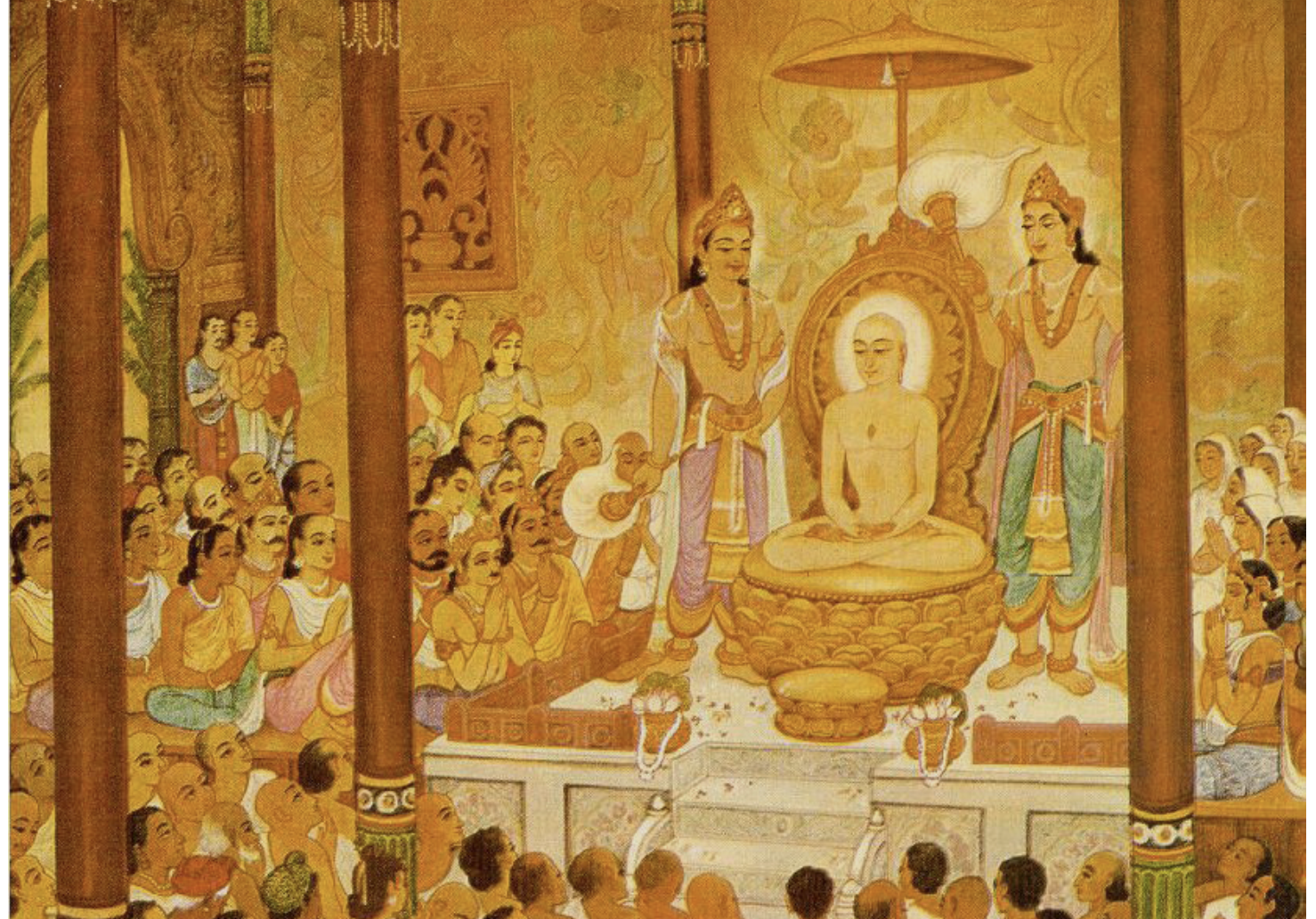
जे केइ उ पव्वइए णियंठे, धम्मं सुणित्ता विणओववण्णे ।
सुदुल्लहं लहिंड बोहिलाभं, विहरेञ्ज पच्छा य जहासुहं तु ॥१७.१॥
Having heard the dharma and become endowed with the vinay of knowledge, vision, and conduct — having obtained the extremely rare benefit of spiritual awakening — one who takes initiation as a nirgrantha yet afterward wanders entirely as he pleases is called a pāpasramaṇa.
The chapter opens by identifying the most fundamental failure of all: receiving the rarest spiritual gift and then wasting it. The practitioner described here has received the dharma (heard the teaching), received vinay (disciplined himself in knowledge, vision, and right conduct), and has formally been initiated as a nirgrantha — one free of all knots and attachments. These are profound spiritual attainments, not casual ones. Initiation as a nirgrantha is not like joining a club — it is a complete, formal renunciation of the householder's world, witnessed by the community. And then — "afterward wanders entirely as he pleases" (paccā ya jahāsuhaṃ tu). The phrase is devastating in its precision: "jahāsuhaṃ" means "as comfort dictates" — he lives by whatever feels pleasant or easy rather than by the discipline of the path. He has the form of renunciation but retains the heart of a householder: always looking for the easier option, always choosing rest over practice, always letting comfort be the deciding factor. The tragedy is that the pāpasramaṇa often does not recognize himself as failing. He still wears the robes. He still recites the prayers. He has simply quietly replaced the dharma with his own convenience.
The Gujarati commentary emphasizes the word sudullaha (extremely rare): bodhi-lābha — the attainment of genuine spiritual awakening and the capacity for liberation — is not given to every soul in every birth. Across countless rebirths in the cycle of samsāra, only the rarest alignment of karma, human birth, and contact with the right teacher makes this possible. Think of it like winning a lottery you didn't know existed, then spending the prize on nothing of lasting value. To receive the most extraordinary opportunity a soul can encounter and then squander it by self-willed wandering is the first and deepest mark of a pāpasramaṇa. It is not moral failure in the ordinary sense — it is a cosmic squandering of the rarest of opportunities. And crucially, the soul who wastes this opportunity must wait through more rebirths, more suffering, more cycles of samsāra before the rare alignment comes again. [VISUAL FLAG #17.1 — A split-screen visual: one side showing the outward robes of a monk, the other showing a heart filled with images of a comfortable home, illustrating the 'heart of a householder']
The simple version: If someone receives the rarest gift — a genuine taste of the spiritual path — and takes vows, but then just lives however feels comfortable rather than following the discipline, they are a fallen monk.