Uttaradhyayana Sutra · Chapter 20

Great Renunciant (महानिर्ग्रन्थीया)

Chapter 20 — The Story of the Masterless Monk and the Awakening of King Śreṇika

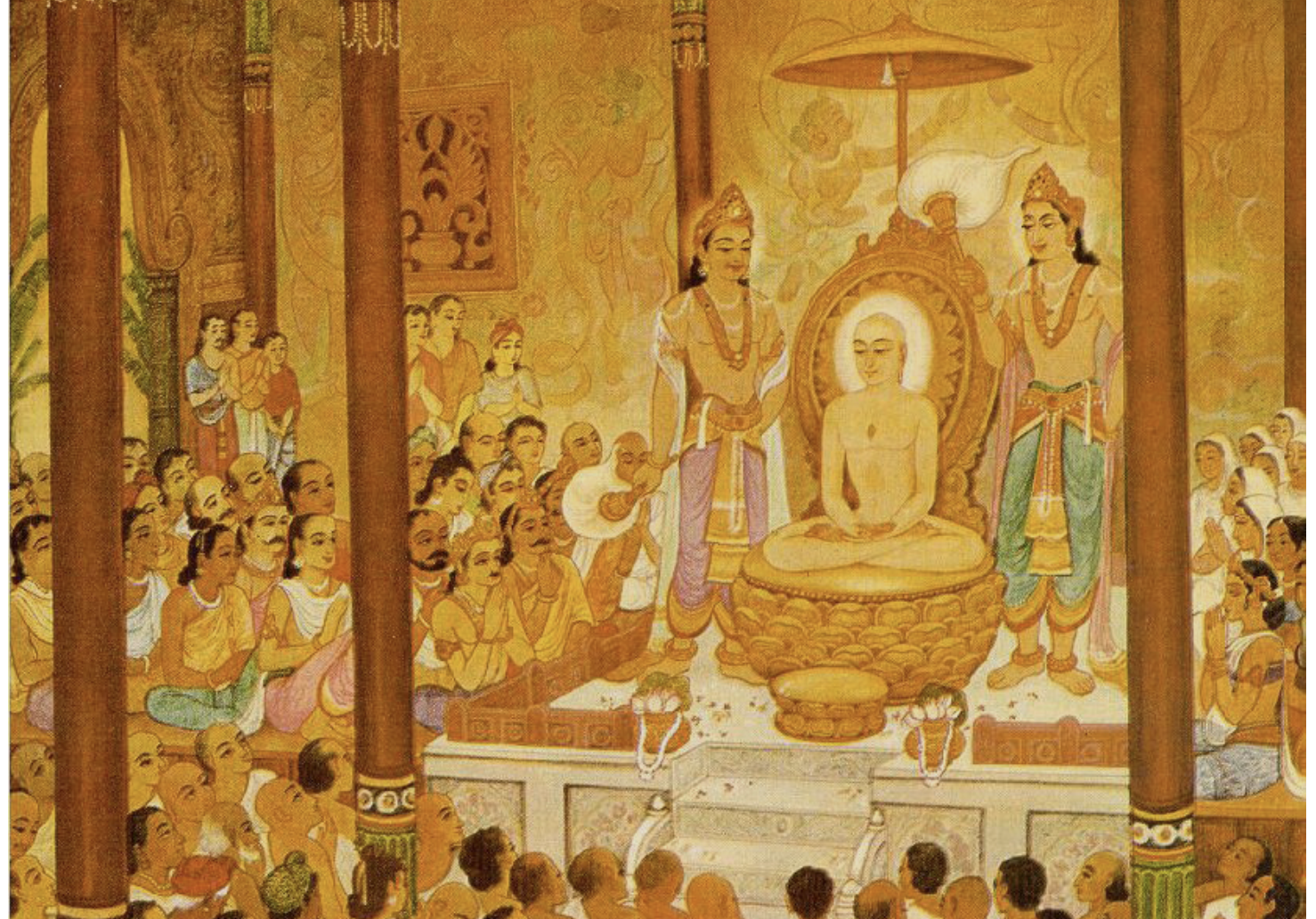
King Śreṇika bows to the monk

अप्पा कत्ता विकत्ता य, दुहाण य सुहाण य

“The self is the doer and the undoer of sorrow and of joy.”

About This Chapter

The Great Nirgrantha

Chapter Structure

I The Encounter in the Maṇḍikukṣi Garden
II The King's Amazement and the Monk's Invitation
III The Monk's Story: A Life Without Protection
IV The Core Philosophy: The Soul is its Own Refuge
V The Second Anāthā: The Laxness of the Unprepared
VI The Path of the Great Nirgranthas
VII The King's Transformation and Departure
29 Sutras
Monks Addressed To
10 Foundations
4 Parts
Adhyayana 16

The 29 Sutras

Presented in two forms: twelve prose canonical statements (the ten foundations) followed by seventeen verse gāthās restating and expanding the same teaching. These are the living words of Bhagavan Mahavira, transmitted across 2500 years.

Part I — The Encounter in the Maṇḍikukṣi Garden
20.1

सिद्धाणं णमो किच्चा, संजयाणं च भावओ । अत्थधम्मगइतच्चं, अणुसिट्टुं सुणेह मे ॥२०.१॥

Having bowed in devotion to the Siddhas and to the restrained ones, listen to me as I teach truly the path of dharma leading to liberation.

Jain PrincipleMoksha · Liberation

Freedom from karma and rebirth is the soul's eternal home.

This mangala verse opens the chapter with a dual salutation — to the Siddhas (those who have already reached the summit of liberation) and to the saṃyata (restrained monastics still on the path). The word bhāvao signals that this is not a ritual bow but a bow of genuine inner devotion. The sutra then announces its purpose: to teach the true path (attha-dhamma-gati) — the way of the soul, the way of dharma, and the way to liberation.

The simple version: Having bowed to the liberated and the disciplined with full heart, I will teach you the true path of dharma — listen.

Devotion Path of Dharma Salutation
20.2

पभूयरयणो राया, सेणिओ मगहाहिवो । विहारजत्तं णिज्जाओ, मंडिकुच्छिस चेइए ॥२०.२॥

King Śreṇika, the lord of Magadha, wealthy in jewels and riches, set out from the city for a stroll to the Maṇḍikukṣi garden.

CautionSamsara · Worldly Existence

Involvement in worldly activities generates binding karma.

King Śreṇika (Bimbisāra) is the epitome of worldly wealth and power — "pabhūyarayaṇo," overflowing with jewels. The setting — a powerful king entering a royal pleasure garden — frames the contrast for the encounter to come. He is "sanātha" in the worldly sense, possessing everything a human could desire.

The simple version: King Śreṇika, the powerful and wealthy lord of Magadha, went out for a garden walk to the Maṇḍikukṣi grove.

King Śreṇika Worldly Wealth Magadha
20.3

णाणादुम लयाइण्णं, णाणापक्खि णिसेवियं । णाणाकुसुम संछण्णं, उज्जाणं णंदणोवमं ॥२०.३॥

The garden — filled with many kinds of trees and creepers, frequented by many kinds of birds, covered with many kinds of flowers — was like the Nandana grove of heaven.

The text dwells on the beauty of the garden to establish the peak of earthly pleasure. Nandana is Indra's paradise garden. Comparing Maṇḍikukṣi to it signals that the king is surrounded by the very best the world can offer. This beauty frames the deeper question of the chapter: can such abundance provide real protection?

The simple version: The garden was filled with countless trees, flowering vines, singing birds, and blooming flowers — it was like a paradise on earth.

Paradise on Earth Beauty Abundance
20.4

तत्थ सो पासइ साहुं, संजयं सुसमाहियं । णिसण्णं रुक्खमूलम्मि, सुकुमालं सुहोइयं ॥२०.४॥

There he saw a monk — restrained, perfectly composed in meditation — seated at the foot of a tree, delicate and radiant with well-being.

Jain PrincipleDhyana · Meditation

Inward focus purifies the mind and awakens inner wisdom.

The first glimpse of Anāthī Muni. He has no throne, no roof, no possessions — yet he is "susamāhiya" (perfectly composed). His body radiates a peace and health ("sukumālaṃ") that arrests the king's gaze. The tree provides his only shelter, yet he possesses a radiance the palace lacks.

The simple version: There in the garden the king saw a monk — calm in meditation, glowing with inner peace — seated quietly under a tree.

Anāthī Muni Meditation Inner Peace
20.5

तस्स रूवं तु पासित्ता, राइणो तम्मि संजए । अच्चंतपरमो आसी, अउलो रूविविम्हओ ॥२०.५॥

Upon beholding the form of that monk, the king was filled with the most extreme and unparalleled amazement at his beauty.

The king's reaction is "rūvivimhao" — profound astonishment at the monk's appearance. The form of a true monk carries the unmistakable signature of inner transformation. This beauty is "aualo" (unparalleled) because it cannot be bought or produced by worldly means.

The simple version: When the king looked at the monk's form, he was filled with extraordinary, unmatched amazement — he had never seen anything quite like it.

Amazement Inner Radiance Transformation
20.6

अहो वण्णो अहो रूवं, अहो अज्जस्स सोमया । अहो खंती अहो मुत्ती, अहो भोगे असंगया ॥२०.६॥

"Wonderful is his complexion! Wonderful is his form! Wonderful is this noble one's serenity! Wonderful his patience! Wonderful his freedom from desire! Wonderful his non-attachment to pleasures!"

CautionSanga · Attachment

Emotional bonds to people and things perpetuate suffering.

The king recognises six qualities, moving from outer to inner: complexion, form, serenity, patience, freedom from craving, and non-attachment. The king's spontaneous "aho" (wonderful!) signals a moment of awakening. He sees what he has been missing in his own life of luxury.

The simple version: The king marvelled aloud: "What complexion! What form! What serenity, what patience, what freedom from craving, what non-attachment to pleasure!"

Noble Qualities Non-Attachment Patience
20.7

तस्स पाए उ वंदित्ता, काऊण य पयाहिणं । णाइदूरमणासण्णे, पंजली पडिपुच्छइ ॥२०.७॥

Having bowed at his feet and circumambulated him, the king stood neither too far nor too close, and with joined palms began to question him.

The etiquette of respect: bowing, circumambulation ("payāhiṇaṃ"), and standing at the correct distance. The most powerful man in Magadha now takes the position of a student. This physical alignment of the body reflects a shift in his heart.

The simple version: The king bowed at the monk's feet, walked around him in reverence, then stood respectfully nearby with joined palms and began to ask him questions.

Respect Pradakshina Etiquette
20.8

तरुणोसि अज्जो पव्वइओ, भोगकालिम्मि संजया । उवट्टिओऽसि सामण्णे, एयमट्टुं सुणेमि ता ॥२०.८॥

"O noble one, you are young and have taken initiation in the time of pleasures. O restrained one, you have come forth into the śramaṇa life — I wish to hear the reason for this."

The king asks the universal question: why renounce pleasure while young? He assumes there is a "right time" for everything — youth for enjoyment, perhaps later for dharma. The monk's answer will dismantle this assumption of "safe" timing.

The simple version: The king asked: "You are young — yet you have chosen the monastic life in the very season of pleasure. O restrained one, I want to hear your reason."

Youth Renunciation Reason
20.9

अणाहो मि महाराय, णाहो मज्झ ण विज्जइ । अणुकंपगं सुहिं वावि, कंचि णाभिसमेमहं ॥२०.९॥

"O Mahārāja, I am without a master (anātha). No master exists for me. I could not find a single compassionate friend to protect me — and so I took initiation."

CautionDukha · Suffering

Suffering arises from identifying with the perishable body and desires.

The answer that defines the chapter: "I am anātha." This doesn't mean a lack of family or wealth, but a deeper truth: in the hour of real suffering, no external person can protect the soul. Suffering is personal; the isolation of pain is the first lesson of karma.

The simple version: The monk answered: "O great king, I am without a master. I found no one — no friend, no companion — who could truly protect me. That is why I took initiation."

Anātha Protection Karma
20.10

तओ सो पहसिओ राया, सेणिओ मगहाहिवो । एवं ते इंदिमंतस्स, कहं णाहो ण विज्जइ ॥२०.१०॥

Then King Śreṇika, lord of Magadha, laughed and said: "How can one with such beauty and power as yours have no master?"

CautionSamsara · Worldly Existence

Involvement in worldly activities generates binding karma.

The king laughs — the laugh of a worldly mind that cannot yet comprehend the depth of the monk's claim. To the king, beauty and power are the definition of protection. He sees only the surface, setting the stage for his own awakening.

The simple version: King Śreṇika laughed and said: "With your beauty and bearing like Indra himself — how can you possibly be without a master?"

Worldly Logic Misunderstanding Surface View
20.11

होमि णाहो भयंताणं, भोगे भुंजाहि संजया । मित्त-णाईपरिवुडो, माणुस्सं खु सुदुल्लहं ॥२०.११॥

"I will be your master, O Venerable One. O restrained one, enjoy pleasures surrounded by friends and relatives — for human birth is indeed very rare."

Jain PrincipleMoksha · Liberation

Freedom from karma and rebirth is the soul's eternal home.

The king offers himself as a patron and master. He uses the classic argument: life is rare, so enjoy it. Ironically, Jainism also teaches life is rare — but as a reason for liberation, not indulgence. The king repeats a truth but draws the wrong conclusion.

The simple version: The king offered: "I will be your master. Enjoy pleasures surrounded by friends and family — for human birth is very rare and precious."

The Offer Rare Human Birth Pleasure
20.12

अप्पणा वि अणाहो सि, सेणिया मगहाहिवा । अप्पणा अणाहो संतो, कहं णाहो भविस्ससि ॥२०.१२॥

"O Śreṇika, lord of Magadha — you yourself are anātha. Being yourself without a master, how can you become a master for another?"

The thunderclap of the chapter: "You too are anātha, Śreṇika." If a king cannot protect himself from his own karma, he cannot protect anyone else. Real protection is not about external power, but the soul's relationship to its own experience.

The simple version: The monk replied: "O Śreṇika, you yourself are anātha. Being yourself without a real master, how can you become a master for me?"

The Reversal True Mastery Sovereignty
Part II — The King's Amazement and the Monk's Invitation
20.13

एवं वुत्तो णिरंदो सो, सुसंभंतो सुविम्हिओ । वयणं अस्सुयपुव्वं, साहुणा विम्हयण्णिओ ॥२०.१३॥

Thus addressed, the king was greatly agitated and profoundly astonished — bewildered by words never heard before, from the mouth of the monk.

"Assuyapuvvaṃ" — words never heard before. The king is shaken because he has encountered a new dimension of truth. This productive confusion is the start of genuine learning. He moves from laughter to deep wonder.

The simple version: Hearing this, the king was shaken and astonished — these were words he had never encountered before, and they left him in a state of wondering confusion.

Astonishment New Truth Agitation
20.14

अस्सा हत्थी मणुस्सा मे, पुरं अंतेउरं च मे । भुंजामि माणुसे भोगे, आणा इस्सरियं च मे ॥२०.१४॥

"Horses, elephants, people are mine; the city and the inner palace are mine. I enjoy human pleasures. Command and sovereignty are mine."

The king lists his credentials: military, social, domestic, and political power. He is trying to explain his framework: to possess things is to be protected. The monk will show that not one of these can stop the ripening of karma.

The simple version: The king protested: "I have horses, elephants, servants, a city, a palace, pleasures — I have command and sovereignty. How can I be without a master?"

Possessions Command Sovereignty
20.15

एरिसे संपयग्गम्मि, सव्वकाम समिप्पिए । कहं अणाहो भवइ, मा हु भंते ! मुसं वए ॥२०.१५॥

"In such abundant prosperity, with all desires fulfilled — how can one be anātha? Please, O Bhagavan, do not speak falsely!"

CautionSamsara · Worldly Existence

Involvement in worldly activities generates binding karma.

The king is so bewildered he almost accuses the monk of lying. "Savvakāma samippe" — all desires fulfilled. In the worldly view, this is safety. The monk is dismantling the idea that getting what you want equals being protected.

The simple version: The king said: "With such wealth and all desires satisfied — how can anyone be without a master? O Venerable One, please do not speak falsehood!"

Prosperity Fulfilment Safety
20.16

ण तुमं जाणे अणाहस्स, अत्थं पोत्थं च पित्थवा । जहा अणाहो भवइ, सणाहो वा णराहिवा ॥२०.१६॥

"O lord of men, you do not know the meaning — neither the word-meaning nor the deeper meaning — of anātha: how one is anātha, or how one is sanātha."

The distinction between "attha" (deeper meaning) and "pottha" (surface meaning). The king knows the word but not its reality. Real anāthāness is the aloneness of the soul in its moment of crisis — a truth the monk is about to illustrate with his own life.

The simple version: The monk said: "O king, you do not know either the literal or the deeper meaning of anātha — how a person truly becomes anātha, or truly sanātha."

Real Meaning Surface vs Depth Understanding
20.17

सुणेह मे महाराय, अव्विक्खत्तेण चेयसा । जहा अणाहो भवइ, जहा मेयं पवित्तियं ॥२०.१७॥

"Listen to me, O Mahārāja, with an undistracted mind — how one becomes anātha, and how I have experienced and applied this understanding."

The invitation to listen with a still mind ("avvikkhattena ceyasā"). The monk will teach through autobiography, not theory. He is about to share his "pavittiyaṃ" — his lived experience of what it means to be masterless.

The simple version: "Listen to me, O great king, with a still and undivided mind — how one becomes anātha, and how I have lived this understanding myself."

Still Mind Lived Experience Invitation
Part III — The Monk's Story: A Life Without Protection
20.18

कोसंबी णाम णयरी, पुराण-पुरभेयणी । तत्थ आसी पिया मज्झ, पभूय-धणसंचओ ॥२०.१८॥

"There is a city called Kauśāmbī — ancient and foremost among cities. There my father lived, one who had accumulated great wealth."

The story begins in the wealthy city of Kauśāmbī. The monk's father had "pabhūya-dhaṇasaṃcao" (abundant wealth). The parallel is deliberate: the monk's past mirrors the king's present. He had every worldly protection the king now values.

The simple version: "In the ancient and magnificent city of Kauśāmbī, my father lived — a man of great accumulated wealth."

Kauśāmbī Heritage Wealthy Origins
20.19

पढमे वए महाराय, अउला मे अच्छिवेयणा । अहोत्था विउलो दाहो, सव्वगत्तेसु य पित्थवा ॥२०.१९॥

"O Mahārāja, in my youth — my first period of life — I developed an unparalleled, unbearable pain in my eyes. And O earthly lord, an intense burning spread through my entire body."

CautionDukha · Suffering

Suffering arises from identifying with the perishable body and desires.

In his youth — the "time of pleasures" mentioned by the king — he was struck by severe eye pain and fever. Suffering doesn't wait for a convenient time. Wealth cannot prevent the arrival of one's own karma in the form of illness.

The simple version: "O great king, in my very youth — the first period of life — I was struck by unbearable pain in my eyes, and an intense burning spread through my entire body."

Illness Suffering Fragility
20.20

सत्थं जहा परमतिक्खं, सरीरविवरंतरे । आवीलिज्ज अरी कुद्धो, एवं मे अच्छिवेयणा ॥२०.२०॥

"As a furious enemy plunges an extremely sharp weapon into the cavities of the body — so was the pain in my eyes."

A vivid simile for extreme pain: an enraged enemy stabbing a sharp blade into the body's sensitive cavities. This is "acchiveyaṇā" — eye pain so intense it feels like a personal, relentless attack that no distraction can soothe.

The simple version: "My eye pain was like a furious enemy driving an extremely sharp weapon into the innermost cavities of my body — that is how it felt."

Intensity Agony Enemy Simile
20.21

तियं मे अंतरिच्छं च, उत्तमंगं च पीडइ । इंदासणिसमा घोरा, वेयणा परमदारुणा ॥२०.२१॥

"It afflicted my waist, my chest, and my head. The pain was like Indra's thunderbolt — terrible, supremely dreadful."

CautionDukha · Suffering

Suffering arises from identifying with the perishable body and desires.

The pain was total, affecting the lower, middle, and upper body. Like Indra's thunderbolt ("iṃdāsaṇisamā"), it struck through his entire being. This total-body suffering stripped away every capacity for normal life or pleasure.

The simple version: "The pain spread to my waist, my chest, and my head — terrible and dreadful like Indra's thunderbolt, striking through my entire being."

Total Suffering Thunderbolt Body and Mind
20.22

उवट्टिया मे आयिरिया, विज्जा-मंत-तिगिच्छगा । अबीया सत्थकुसला, मंत-मूलविसारया ॥२०.२२॥

"Physicians came to treat me — skilled in medicine, mantra, and healing arts; uniquely expert in śalya-surgery; fully versed in mantra and medicinal herbs."

His father brought the world's best specialists — "abīyā" (without equal). They used every tool available: knowledge, mantras, surgery, and herbs. The point is clear: there was no lack of external resources or skill.

The simple version: "Physicians came to treat me — masters of medicine, mantra, and healing; unrivalled experts in surgery and herbal remedies."

Medical Care Specialists Healing Arts
20.23

ते मे तिगिच्छं कुव्वंति, चाउप्पायं जहाइयं । ण य दुक्खा विमोयंति, एसा मज्झ अणाहया ॥२०.२३॥

"They performed for me the four-fold treatment — the best available. Yet they could not free me from suffering. This was my anāthā."

CautionDukha · Suffering

Suffering arises from identifying with the perishable body and desires.

The best medicine ("cāuppāyaṃ") failed. This is the first definition of anāthā: the realization that even the best care cannot remove personal karma. "Esā majjha aṇāhayā" — this was my masterless-state. Help was there, but it couldn't reach the pain.

The simple version: "They gave me the complete four-fold treatment, with the best of their skill — yet they could not free me from suffering. That was my anāthāness."

Failure of Medicine Irreducible Karma Anāthā
20.24

पिया मे सव्वसारं पि, दिज्जाहि ममकारणा । ण य दुक्खा विमोएइ, एसा मज्झ अणाहया ॥२०.२४॥

"My father was ready to give away all his wealth for my sake. Yet he could not free me from pain. This was my anāthāness."

CautionDukha · Suffering

Suffering arises from identifying with the perishable body and desires.

His father was willing to spend everything — "savvasāraṃ" (his entire treasury). Total parental devotion was present. But wealth has no power over the soul's suffering. This is the second level of anāthā: the limits of parental protection.

The simple version: "My father was willing to give everything he owned for my sake — yet he could not free me from my pain. That was my anāthāness."

Father's Love Limit of Wealth Sacrifice
20.25

माया वि मे महाराय, पुत्तसोगदुहिट्टिया । ण य दुक्खा विमोएइ, एसा मज्झ अणाहया ॥२०.२५॥

"My mother too, O Mahārāja — devastated by grief for her son — could not free me from pain. This was my anāthāness."

His mother was "puttasogaduhiṭṭiyā" — devastated by grief. Maternal love is the strongest known, yet even her tears couldn't wash away his karma. The monk shows that even the deepest emotional bonds cannot offer final protection.

The simple version: "My mother was devastated by grief for me — yet even she could not free me from my pain. That was my anāthāness."

Mother's Grief Helplessness of Love Karma
20.26

भायरो मे महाराय, सगा जेट्टु कणिट्टुगा । ण य दुक्खा विमोयंति, एसा मज्झ अणाहया ॥२०.२६॥

"My brothers, O Mahārāja — both elder and younger, my own blood — could not free me from pain. This was my anāthāness."

Brothers represent the strongest solidarity of blood and childhood. They tried everything in their power. Still, they were helpless. The monk systematically dismantles the hope that any relationship can "solve" the soul's crisis.

The simple version: "My brothers — both elder and younger, my own blood — could not free me from my pain either. That was my anāthāness."

Brotherly Solidarity Blood Bonds Isolation
20.27

भइणीओ मे महाराय, सगा जेट्टु कणिट्टुगा । ण य दुक्खा विमोयंति, एसा मज्झ अणाहया ॥२०.२७॥

"My sisters too, O Mahārāja — elder and younger, my own — could not free me from pain. This was my anāthāness."

CautionDukha · Suffering

Suffering arises from identifying with the perishable body and desires.

Sisters complete the family circle. The repetition of "esā majjha aṇāhayā" hammers home the same nail: in the depths of suffering, you are alone. No matter how crowded the room is with loving family, only you experience your pain.

The simple version: "My sisters too — elder and younger, my own — could not free me from my pain. That was my anāthāness."

Sisters Family Net Aloneness in Pain
20.28

भारिया मे महाराय, अणुरत्ता अणुव्वया । अंसुपुण्णेहिं णयणेहिं, उरं मे परिसिंचइ ॥२०.२८॥

"My wife, O Mahārāja — devoted to me, faithful and obedient — soaked my chest with eyes full of tears."

A tender, human image: a faithful wife weeping so intensely that her tears soak his chest. She is completely present, "aṇurattā aṇuvvayā" (devoted and following the same path). Even this intimacy cannot reach into the core of the suffering.

The simple version: "My wife — deeply devoted and faithful — soaked my chest with her tear-filled eyes, weeping beside me."

Wife's Devotion Tears Intimacy and Helplessness
20.29

अण्णं पाणं च ण्हाणं च, गंध-मल्ल विलेवणं । मए णायमणायं वा, सा बाला णेव भुंजइ ॥२०.२९॥

"Whether knowingly or unknowingly — that young wife did not eat food, drink water, bathe, or use scent, garlands, or ointments."

The wife's total solidarity: she stopped eating, drinking, and caring for herself out of grief for him. This wasn't just a choice; it was total absorption in his pain. Yet, this extreme solidarity still offered no release from the karmic debt.

The simple version: "Out of devotion, my young wife stopped eating, drinking, bathing, and adorning herself — knowingly or unknowingly, she gave it all up for my sake."

Solidarity Self-Sacrifice Bond of Love
20.30

खणं पि मे महाराय, पासाओ वि ण फिट्टइ । ण य दुक्खा विमोएइ, एसा मज्झ अणाहया ॥२०.३०॥

"She did not leave my side even for a single moment. Yet she could not free me from pain. This was my anāthāness."

The final entry in the list of loved ones. She never left his side. Total constancy. And still: "esā majjha aṇāhayā." Love is real, presence is real, but they are not ultimate protection. Each soul bears its own cross.

The simple version: "She never left my side for even a moment — yet she could not free me from my pain. That was my anāthāness."

Constant Presence Final Definition Responsibility
20.31

तओऽहं एवमाहंसु, दुक्खमा हु पुणो पुणो । वेयणा अणुभविउं जे, संसारम्मि अणंताए ॥२०.३१॥

"Then I thought thus: truly it is painful to experience, again and again, the sufferings that come in the infinite cycle of saṃsāra."

CautionDukha · Suffering

Suffering arises from identifying with the perishable body and desires.

The inner turning point. Amidst the helpless love and pain, he reflects: "This has happened before, and will happen again." He sees the structural feature of an infinite cycle of rebirth ("aṇaṃtāe saṃsārammi"). This realization is the seed of renunciation.

The simple version: "Then I reflected: it is truly painful to experience suffering again and again throughout the infinite cycle of existence."

Reflection Samsara Endless Cycle
20.32

सइं च जइ मुच्वेज्जा, वेयणा विउला इओ । खंतो दंतो णिरारंभो, पव्वइए अणगारियं ॥२०.३२॥

"If I were ever freed from this intense suffering, I would — patient, self-controlled, and free from violent action — take initiation into the homeless life of a monk."

Jain PrincipleVinaya · Discipline

Self-imposed order of thought, word, and deed transforms the soul.

CautionDukha · Suffering

Suffering arises from identifying with the perishable body and desires.

The vow. If the pain ends, he will take initiation. But he defines the *kind* of monk he will be: "khaṃto" (patient), "daṃto" (disciplined), and "ṇirāraṃbho" (non-violent). He prepares inwardly while still in the furnace of pain.

The simple version: "I resolved: if I am ever freed from this intense suffering, I will take initiation — patient, disciplined, and non-violent — into the homeless monastic life."

The Vow Patience Non-Violence
20.33

एवं च चिंतइत्ताणं, पसुत्तो मि णराहिवा । परियट्टंतीए राईए, वेयणा मे खयं गया ॥२०.३३॥

"O lord of men, having thought thus, I fell asleep — and as the night passed, my suffering disappeared and I became well."

CautionDukha · Suffering

Suffering arises from identifying with the perishable body and desires.

As soon as the resolution was firm, the pain ended. The karma was exhausted. The night passed ("pariyaṭṭaṃtīe rāīe"), and with it, the suffering. This wasn't a medical cure, but a karmic opening that followed his inner change.

The simple version: "Having made that resolution, I fell asleep. As the night passed, my pain simply disappeared — I was healed."

Healing Karma Exhausted Resolution
20.34

तओ कल्ले पभायम्मि, आपुच्छित्ताण बंधवे । खंतो दंतो णिरारंभो, पव्वइओऽणगारियं ॥२०.३४॥

"Then at dawn on the next day, having taken leave of my relatives — patient, self-controlled, and non-violent — I took initiation into the homeless monastic life."

The very next morning. No delay, no excuses. He asked his family's leave and fulfilled his vow immediately. He stepped from the wealthy life of Kauśāmbī into the homeless path, carrying only his inner resolve.

The simple version: "The very next morning, I took leave of my family — and patient, disciplined, and non-violent — I went forth into the homeless monastic life."

Initiation Promptness Honouring Vows
20.35

तओऽहं णाहो जाओ, अप्पणो य परस्स य । सव्वेसिं चेव भूयाणं, तसाणं थावराण य ॥२०.३५॥

"After taking initiation, I became the master — of myself and of others; of all living beings, both mobile and immobile."

Jain PrincipleAhimsa · Non-Violence

Harmlessness toward all beings is the foundation of all virtues.

The great reversal. By renouncing the world and harm, the one who was "anātha" (masterless) became a "nātha" (protector) for all. Real protection is the commitment to non-violence toward every being, moving or still. He is now truly sanātha.

The simple version: "After initiation, I became the true master — of myself and of all others; of every living being, moving and still."

True Protector Universal Compassion Self-Mastery
Part IV — The Core Philosophy: The Soul is its Own Refuge
20.36

अप्पा णई वेयरणी, अप्पा मे कूडसामली । अप्पा कामदुहा धेणु, अप्पा मे णंदणं वणं ॥२०.३६॥

"The self is the Vaitaraṇī river (of suffering). The self is the Kūṭaśālmali tree (of torture). The self is the wish-fulfilling cow (of joy). The self is the Nandana forest (of delight)."

CautionDukha · Suffering

Suffering arises from identifying with the perishable body and desires.

The self creates its own cosmos. Two images of hell (Vaitaraṇī river, Kūṭaśālmali tree) and two of heaven (Kāmadhenu cow, Nandana forest) are assigned to the self. Your experiences of suffering or joy are the results of your own actions. No external power assigns them.

The simple version: "The self is its own river of suffering, its own torture tree, its own wish-fulfilling cow, its own paradise — the self creates its own hell and heaven."

Self as Creator Hell and Heaven Karma
20.37

अप्पा कत्ता विकत्ता य, दुहाण य सुहाण य । अप्पा मित्तममित्तं च, दुप्पट्टिय-सुप्पट्टिओ ॥२०.३७॥

"The self is the doer and the undoer of sorrow and of joy. The self is its own friend and its own enemy — travelling the good path or the bad."

The self is its own moral agent. Following the "bad path" (duracaraṇa) makes you your own enemy; following the "good path" (suconduct) makes you your own friend. This is the highest form of agency: you decide your own spiritual friendship.

The simple version: "The self creates its own sorrow and joy. The self is its own best friend when it walks the right path — and its own worst enemy when it walks the wrong one."

Moral Agency Friend of Self Path Choice
Part V — The Second Anāthā: The Laxness of the Unprepared
20.38

इमा हु अण्णा वि अणाहया णिवा, तमेगचित्तो णिणुओ सुणेहि । णियंठधम्मं लिहयाण वि जहा, सीयंति एगे बहुकायरा णरा ॥२०.३८॥

"O king, there is also another kind of anāthā. Listen to it steadily with a focused mind — how even after accepting the Nirgrantha dharma, many people of weak resolve become lax."

Jain PrincipleVinaya · Discipline

Self-imposed order of thought, word, and deed transforms the soul.

A more subtle teaching on anāthā: those who take the path but become "bahukāyarā" (of weak resolve). Even in robes, one can be unprotected if one's discipline is slack. This is a warning to practitioners against the comfort of form over substance.

The simple version: "There is also another form of anāthāness, O king. Listen with full attention: how even those who accept the Nirgrantha path become lax and weak in their resolve."

Laxness Weak Resolve Second Anāthā
20.39

जो पव्वइत्ताण महव्वयाइं, सम्मं च णो फासयइ पमाया । अणिग्गहप्पा य रसेसु गिद्धे, ण मूलओ छिण्णइ बंधणं से ॥२०.३९॥

"One who, after taking initiation and the great vows, does not properly observe them through negligence — who has no self-mastery and is attached to tastes — cannot cut the bonds of karma at the root."

CautionPamada · Negligence

Indifference to spiritual practice wastes the precious human birth.

The profile of the lapsed monk: no self-mastery and addiction to tastes ("rasesu giddhe"). Negligence ("pamāyā") prevents the cutting of karmic bonds. Partial or symbolic practice does not lead to liberation; the root remains untouched.

The simple version: "One who takes initiation and the great vows but practises them carelessly — without self-mastery, attached to pleasures — cannot cut the bonds of karma at the root."

Negligence Attachment to Tastes Lapsed Practice
20.40

आउत्तया जस्स ण अत्थि काइ, इरियाए भासाए तहेसणाए । आयाण णिक्खेव-दुगुंछणाए, ण वीरजायं अणुजाइ मग्गं ॥२०.४०॥

"One who has no mindfulness whatsoever — in movement (īryā), speech (bhāṣā), obtaining food (eṣaṇā), in lifting and placing things (ādāna-nikṣepa), and in bodily functions (duguṃchanā) — does not follow the path proclaimed by the Jina."

The test of authenticity is the five "samitis" (mindfulness regulations). Without care in movement, speech, eating, and handling things, one is not on the Jina's path. Mindfulness is the practical expression of non-violence in every moment.

The simple version: "One who has no mindfulness in movement, speech, obtaining food, handling objects, and bodily functions — that person does not follow the path of the Jina."

Five Samitis Mindfulness Jina's Path
20.41

चिरं पि से मुंडरुई भवित्ता, अथिरव्वए तव-णियमेहिं भट्टे । चिरं पि अप्पाण किलेसइत्ता, ण पारए होइ हु संपराए ॥२०.४१॥

"Even one who has lived long with a shaved head — unstable in vows and fallen from austerities and disciplines, who has tortured oneself for a long time — truly cannot cross the ocean of saṃsāra."

Jain PrincipleVinaya · Discipline

Self-imposed order of thought, word, and deed transforms the soul.

A shaved head ("muṃḍaruī") is just an external sign. If the vows are unstable ("athiravvae"), years of physical hardship mean nothing. Torturing the body without inner discipline is not liberation — it's just extra suffering.

The simple version: "Even someone who has worn the shaved head for many years — if their vows are unstable and they have deviated from austerity — they cannot cross the ocean of saṃsāra, however long they persist."

Form vs Substance Unstable Vows Asceticism
20.42

पोल्ले व मुट्टी जह से असारे, अयंतिए कूडकहावणे वा । राधामणी वेरुलियप्पगासे, अमहग्घए होइ हु जाणएसु ॥२०.४२॥

"Like a hollow fist that is worthless, or a counterfeit coin that is unusable — though it may shine like a real jewel (vaiḍūrya), it is of no value among the wise."

Three similes for the lapsed monk: a hollow fist, a counterfeit coin, and a common stone gleaming like a gem. They have the appearance of value but no actual substance. Among the wise ("jāṇaesu"), they have no spiritual worth.

The simple version: "Like a hollow fist, a counterfeit coin, or a stone that shines like a gem — such a monk, however they appear, has no real value among the wise."

Counterfeit Hollow Form Wise Discerning
20.43

कुसील लिंगं इह धारइत्ता, इसिज्झयं जीविय बूहइत्ता । असंजए संजय लप्पमाणे, विणिचाय-मागच्छइ से चिरंपि ॥२०.४३॥

"One who wears the ascetic's marks in this life while sustaining their livelihood through the sage's symbols — being undisciplined yet calling themselves disciplined — comes to ruin, however long they persist."

Jain PrincipleVinaya · Discipline

Self-imposed order of thought, word, and deed transforms the soul.

Spiritual fraud: using the symbols of a sage ("isijjhayaṃ") as a means of livelihood ("jīviya būhaittā"). This is the lowest form of laxness — wearing the robes for food and respect while ignoring the discipline. It leads to certain ruin.

The simple version: "One who wears the monk's marks as a livelihood — undisciplined but calling themselves disciplined — comes to ruin in the end, however long they persist."

Spiritual Fraud Livelihood Ruin
20.44

विसं तु पीयं जह कालकूडं, हणाइ सत्थं जह कुग्गहीयं । एसो वि धम्मो विसओवण्णो, हणाइ वेयाल इवाविवण्णो ॥२०.४४॥

"Just as the kālakūṭa poison drunk destroys life, just as a weapon grasped the wrong way kills the one who holds it — so too does dharma, when pervaded by sensory attachment, destroy — like an uncontrolled demon."

CautionSanga · Attachment

Emotional bonds to people and things perpetuate suffering.

A terrifying warning: dharma practised with sensory attachment ("visaovṇṇo") becomes destructive. Like a weapon held by the blade, it harms the practitioner. It becomes a "veyāla" — an uncontrolled demon — causing spiritual destruction.

The simple version: "Just as poison kills when drunk and a weapon kills when held wrongly — so dharma filled with sensory attachment destroys like an uncontrolled demon."

Dangerous Dharma Misuse Attachment
20.45

जे लक्खणं सुविणं पउंजमाणे, णिमित्त-कोउहल संपगाढे । कुहेड-विज्जासव-दारजीवी, ण गच्छइ सरणं तम्मि काले ॥२०.४५॥

"One who practises omens and dream-reading, deeply immersed in fortune-telling and entertainment magic, who makes a living through harmful occult arts — finds no refuge in the hour of karmic ripening."

Monks are forbidden from practicing occult arts (palmistry, astrology, magic) for a livelihood. These "kuheḍa-vijjāsava" (false knowledge) arts offer no refuge ("ṇā gachai saraṇaṃ") when the final hour of karma arrives.

The simple version: "A monk who practises fortune-telling, dream-reading, and harmful occult arts for a living — finds no refuge in the hour when karma ripens."

Occult Arts Forbidden Livelihood False Refuge
20.46

तमंतमेणेव उ से असीले, सया दुही विप्परियासुवेइ । संधावइ णरग तिरिक्ख जोणिं, मोणं विराहितु असाहुरूवे ॥२०.४६॥

"Shrouded in darkness by immorality — that vessel-monk always experiences inverted states of suffering. Violating the silence (mona) of monasticism, appearing as a monk without being one, he wanders into hell and animal births."

CautionDukha · Suffering

Suffering arises from identifying with the perishable body and desires.

The pseudo-monk violates "moṇaṃ" — the inner silence and essence of monasticism. Pursuing ease through fraud, he finds the reverse: constant suffering and rebirth in lower realms. The "deepest darkness" is his chosen state.

The simple version: "Blinded by immorality, that pseudo-monk always suffers, experiencing the reverse of what they seek. Violating true monasticism while wearing its form, they wander into hell and animal rebirths."

Inner Darkness Violation of Mona Rebirth
20.47

उद्देसियं कीयगडं णियागं, ण मुंचइ किंचि अणेसिणज्जं । अग्गी विव सव्वभक्खी भवित्ता, इतो चुए गच्छइ कट्टु पावं ॥२०.४७॥

"One who accepts food prepared specifically for them, purchased for them, or obtained by invitation — who does not abandon anything that is impure alms — becomes like fire, consuming everything, and after completing their life here, goes to a bad destination loaded with sin."

Jain PrincipleAhimsa · Non-Violence

Harmlessness toward all beings is the foundation of all virtues.

Strict food rules: no specially prepared or purchased alms. A monk who eats indiscriminately like fire ("aggī viva") violates the core of non-violence. He accumulates "pāvaṃ" (sinful karma) and faces a dark future.

The simple version: "One who accepts food specially prepared, purchased, or invited for them — consuming without discrimination like fire — accumulates great sin and goes to a bad destination."

Pure Alms Indiscriminate Eating Karmic Price
20.48

ण तं अरी कंठछेत्ता करेइ, जं से करे अप्पिणया दुरप्पा । से णाहइ मच्चुमुहं तु पत्ते, पच्छाणुतावेण दयाविहूणो ॥२०.४८॥

"An enemy who severs the throat cannot do to one what one's own corrupt soul does to oneself. When such a person reaches the face of death — that compassionless one realises it only through belated regret."

CautionImpermanence and Death

All worldly things are temporary—clinging to them brings suffering.

An enemy kills only once. A corrupt soul ("durappā") destroys lifetimes. The tragedy is "pacchāṇutāveṇa" — the realization comes only at death's door, when it's too late. To be "dayāvihūṇo" is to have no compassion even for one's own soul.

The simple version: "No enemy who cuts your throat can harm you as much as your own corrupt soul does to itself. The realisation comes only at the moment of death — as regret, far too late."

Self-Harm Belated Regret Greatest Enemy
20.49

णिरट्टिया णग्गरुई उ तस्स, जे उत्तमट्टुं विवज्जासमेइ । इमे वि से णत्थि परे वि लोए, दुहओ वि से झिज्जइ तत्थ लोए ॥२०.४९॥

"For one who abandons the highest purpose — even the inclination toward mere nudity (external monasticism) is meaningless. Neither this world nor the next is achieved; one is consumed by failure in both."

Jain PrincipleTyaga · Renunciation

Voluntarily releasing worldly attachments leads to spiritual freedom.

Abandoning "uttamaṭṭuṃ" (the highest purpose — liberation) makes even extreme renunciation like nudity ("ṇaggaruī") worthless. It is a double failure: no peace in this world, and no liberation in the next.

The simple version: "For one who abandons the highest purpose, even the external form of monasticism is pointless. They fail in this world and the next — consumed by failure on both sides."

Highest Purpose External Form Double Failure
20.50

एमेवऽहाछंद कुसीलरूवे, मग्गं विराहितु जिणुत्तमाणं । कुररी विव भोगरसाणुगिद्धा, णिरट्टुसोया परियावमेइ ॥२०.५०॥

"In this same way, the self-willed and morally lax 'monk' — violating the supreme path of the Jinas — like a female osprey addicted to the taste of meat, mourns pointlessly and comes to grief."

The osprey ("kurarī") addicted to the taste of meat laments pointlessly when it's lost. The lapsed monk pursuing sensory pleasure is the same: always wanting, always mourning, never free. His grief is "ṇiraṭṭusoyā" — pointless and self-created.

The simple version: "Just like an osprey that mourns pointlessly over lost meat — the self-willed lapsed monk, addicted to sensory pleasures and violating the Jina's path, comes to grief."

Addiction Pointless Grief The Osprey Simile
Part VI — The Path of the Great Nirgranthas
20.51

सोच्चाण मेहावि सुभासियं इमं, अणुसासणं णाणगुणोववेयं । मग्गं कुसीलाण जहाय सव्वं, महाणियंठाण वए पहेणं ॥२०.५१॥

"O wise one, having heard this well-spoken teaching — endowed with the qualities of knowledge — abandoning completely the path of the lax, walk the path of the great Nirgrantha ones."

CautionSanga · Attachment

Emotional bonds to people and things perpetuate suffering.

The exhortation: hear the truth and abandon the path of laxity ("ku-śīla"). Walk instead with the "Mahāṇiyaṃṭhāṇa" — the Great Nirgranthas who have cut all knots of attachment. This is the positive call to action after the warnings.

The simple version: "O wise one, having heard this teaching laden with knowledge — abandon the path of laxity completely and walk the path of the great Nirgrantha ones."

The Exhortation Great Nirgranthas Knot-Free
20.52

चरित्तमायारगुणिण्णिए तओ, अणुत्तरं संजम पालियाणं । णिरासवे संखिवयाण कम्मं, उवेइ ठाणं विउलुत्तमं धुवं ॥२०.५२॥

"One who is endowed with the qualities of right conduct and proper ācarā, who has maintained the supreme restraint — becoming free from karmic influx and destroying accumulated karma — reaches the vast, supreme, and eternal abode."

Jain PrincipleMoksha · Liberation

Freedom from karma and rebirth is the soul's eternal home.

The Jain path summarized: right conduct + supreme restraint → stopping new karma (nirāsava) → destroying old karma (saṃkhivayāṇa kammaṃ) → liberation ("ṭhāṇaṃ dhuvaṃ"). This is the final destination for the authentic practitioner.

The simple version: "One who maintains right conduct and supreme restraint — stopping new karma and destroying the old — reaches the vast, supreme, and eternal abode of liberation."

Summary of Path Nirjara Eternal Abode
20.53

एलुग्गदंते वि महातवोधणे, महामुणी महापइण्णे महायसे । महाणियंठिज्जमिणं महासुयं, से काहए महया वित्थरेणं ॥२०.५३॥

"This Mahānirgranthīya Mahāśruta — the great canonical text of the great Nirgranthas — was spoken in great detail by this great ascetic, this great Muni, this one of great resolve and great fame, who had even worn out his teeth through austerity."

Jain PrincipleTapa · Austerity

Deliberate practice that weakens karma and strengthens the soul.

The narrator identifies Anāthī Muni as a "Mahāmuṇī" of immense tapas. "Elluggadaṃte" — his teeth were worn by decades of austerity. He speaks from a lifetime of practice, not just theoretical study. This is the weight of the Mahānirgranthīya teaching.

The simple version: "This great Mahānirgranthīya teaching was spoken in detail by the great Anāthī Muni — his teeth worn by austerity, his tapas immense, his resolve firm, his fame great."

Anāthī Muni Great Ascetic Weight of Truth
Part VII — The King's Transformation and Departure
20.54

तुट्टो य सेणिओ राया, इणमुदाहु कयंजली । अणाहत्तं जहाभूयं, सुट्टु मे उवदंसियं ॥२०.५४॥

"King Śreṇika, deeply satisfied, joined his palms and said: 'The truth of anāthāness, just as it is, has been beautifully shown to me.'"

CautionSamsara · Worldly Existence

Involvement in worldly activities generates binding karma.

The king's transformation. He is "tuṭṭo" (satisfied with understanding). He joins his palms, recognizing the "real nature" ("jahābhūyaṃ") of protection. He has moved from a worldly view to a spiritual one through the monk's testimony.

The simple version: "King Śreṇika, deeply satisfied, joined his palms and said: 'The true nature of anāthāness has been shown to me beautifully — exactly as it is.'"

Transformation Realization Śreṇika's Response
20.55

तुज्झं सुलद्धं खु मणुस्स जम्मं, लाभा सुलद्धा य तुमे महेसी । तुम्भे सणाहा य सबंधवा य, जं भे ठिया मग्गे जिणुत्तमाणं ॥२०.५५॥

"O great sage, truly your human birth is well-obtained! Your attainments are truly well-obtained! You are truly sanātha (with a master) and with kin — because you stand on the path of the supreme Jinas."

The final reversal. The king recognizes the monk as the truly "sanātha" (protected) one. Real kinship and protection come from standing on the Jina's path. The definition of security has been completely overturned.

The simple version: "O great sage — your human birth is truly well-spent! Your attainments are real! You are truly sanātha and truly with kin — because you stand on the path of the supreme Jinas."

Truly Sanātha Well-Spent Life Dharmic Kinship
20.56

तं सि णाहो अणाहाणं, सव्वभूयाण संजया । खामेमि ते महाभाग, इच्छामि अणुसासिउं ॥२०.५६॥

"You are the master of the masterless, O restrained one — the protector of all living beings. O greatly blessed one, I seek your forgiveness — and I wish to receive your instruction."

Jain PrincipleAhimsa · Non-Violence

Harmlessness toward all beings is the foundation of all virtues.

The king asks for forgiveness ("khāmemi"). He recognizes the monk as "aṇāhāṇaṃ nāha" — the protector of the masterless. By his non-violence, the monk protects all beings. The king now asks to be instructed, completing his transition from patron to student.

The simple version: "You are the master of the masterless — the protector of all living beings. O great one, I seek your forgiveness and wish to receive your instruction."

Forgiveness Universal Protector Seeking Instruction
20.57

पुच्छिऊण मए तुब्भं, झाणविग्घो य जो कओ । णिमंतिया य भोगेहिं, तं सव्वं मरिसेहि मे ॥२०.५७॥

"I asked you questions and thereby disturbed your meditation. I also invited you to pleasures — please forgive me all of that."

Jain PrincipleDhyana · Meditation

Inward focus purifies the mind and awakens inner wisdom.

The king's specific repentance: he disturbed the monk's dhyāna (meditation) and invited him back to worldliness. Real "kṣamāyācanā" involves identifying the specific harms caused. He seeks to clear his own karmic debt.

The simple version: "By questioning you, I disturbed your meditation. By inviting you to pleasures, I tried to pull you from your path. Please forgive me for all of this."

Repentance Disturbing Meditation Misguidance
20.58

एवं थुणित्ता स रायसीहो, अणगारसीहं परमाइ भत्तिए । सओरोहो सपरियणो सबंधवो, धम्माणुरत्तो विमलेण चेयसा ॥२०.५८॥

"Having thus praised the lion among monks with utmost devotion — that lion among kings, together with his queens, retinue, and relatives, became devoted to dharma with a pure mind."

The encounter between the "rāyasīho" (lion among kings) and the "aṇagārasīha" (lion among monks). The transformation ripples out to the entire royal court. They become "dhammāṇuratto" — devoted to dharma with a pure mind.

The simple version: "The lion among kings praised the lion among monks with supreme devotion — and together with his queens, retinue, and relatives, he became devoted to dharma with a pure mind."

The Two Lions Royal Transformation Pure Mind
20.59

ऊससिय-रोमकूवो, काऊण य पयाहिणं । अभिवंदिऊण सिरसा, अइयाओ णराहिवो ॥२०.५९॥

"His body's hair standing upright with joy, having circumambulated and bowed his head in salutation — the king departed to his own place."

The physical signs of spiritual awe: "ūsasiya-romakūvo" (hairs standing on end). The king's departure is the opposite of his arrival — he leaves with deep reverence and awe, transformed by the encounter with truth.

The simple version: "His body hair standing on end with spiritual joy, the king circumambulated the monk, bowed his head, and departed to his own place."

Spiritual Joy Reverence Departure
20.60

इयरो वि गुणसमिद्धो, तिगुत्तिगुत्तो तिदंडविरओ य । विहग इव विप्पमुक्को, विहरइ वसुहं विगयमोहो ॥६०॥ – ति बेमि

"And the other — Anāthī Muni — rich in all virtues, guarded by the triple guard (of mind, speech, body), free from the three sticks (of violence), and free from delusion — wandered the earth like a bird set free." — Thus I say.

Jain PrincipleMoksha · Liberation

Freedom from karma and rebirth is the soul's eternal home.

CautionMoha · Delusion

False perception of reality keeps the soul bound in karma.

The monk's state: "guṇasamiddho" (virtuous), "tigutti-gutto" (internally guarded), and "vigayamoho" (free from delusion). The crowning image of liberation: "vihaga iva vippamukko" — like a bird set free. He wanders the earth in perfect peace. "Ti bemi" (Thus I say) seals the chapter.

The simple version: "And Anāthī Muni — rich in virtue, guarded within, free from violence, free from delusion — wandered the earth like a bird set free. Thus I say."

Liberation Bird Set Free Final Peace Thus I Say
॥ अध्ययन-२० सम्पूर्ण ॥

End of Chapter 20 — Mahānirgranthīya

← Ch 19 Ch 21 →