These are the fundamentals that most Jains were never taught — and every human deserves to know.
Dated: Vikram Samvat 2081
For centuries, the core tenets of Jainism—Ahimsa, Anekantavada, and Aparigraha—have been simplified into mere dietary restrictions or passive rituals. We believe these are not just rules, but a sophisticated technology of the soul.
Jain Awaken was born to bridge the gap between ancient Prakrit manuscripts and the modern seeker. We strip away the cultural dogma to reveal the raw, rigorous scholarship of liberation.
Verified translations and ontological breakdowns of the Tattvartha Sutra and beyond.
A non-sectarian space for the preservation and contemplation of Tirthankara wisdom.
The most powerful prayer in Jainism — a universal salutation to all enlightened souls, not to any one god.
Right perception — the foundation of the spiritual path, where you see reality as it truly is.
The Three Jewels — right faith, right knowledge, and right conduct — the complete path to liberation.
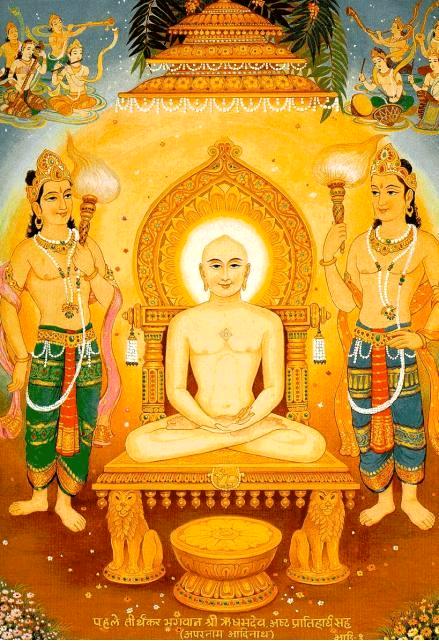
The 24 enlightened beings who manifest in each cosmic cycle to guide all souls across the ocean of rebirth toward liberation.
Is Jainism atheistic, theistic, or neither? Understand the unique theological position that transcends all standard categories.
A new foundational topic is being prepared for this collection.
The soul — the eternal conscious being with infinite knowledge, perception, bliss, and energy.
Non-living matter — everything in the universe that is not a soul, from atoms to space and time.
The six eternal substances that make up the entire universe — soul, matter, motion, rest, space, and time.
The four realms of existence — celestial, human, animal/plant, and hellish — where souls are born based on karma.
The nine realities — the complete framework that explains how karma binds the soul and how to break free.
कषाय
Karma System
How long your emotions last determines your spiritual ceiling — and exactly how far you can go.
The two types of karma — destructive ones that block the soul's true nature, and non-destructive ones that shape the body and life.
The four passions — anger, pride, deceit, and greed — the root causes that attract karma to the soul.
Influx, stoppage, and shedding — the three-part process of how karma enters the soul, how to stop it, and how to burn it off.
The six colors of the soul — from black to white — that reflect its spiritual purity based on thoughts and actions.
The practical discipline of daily spiritual practice — how to live, think, and act on the path to liberation.
Begin ReadingRight conduct — the ethical discipline of non-violence, truthfulness, and self-control in daily life.
The twelve reflections — meditative contemplations that develop detachment, compassion, and inner peace.
The practice of self-reflection and repentance — reviewing your actions and seeking forgiveness for harm caused.
The fourteen stages of spiritual progress — a precise map from complete delusion to total liberation.
The doctrine of many-sidedness — no single viewpoint captures the whole truth. Reality is infinite, and every perspective reveals only a part of it.